
How much does house demolition cost in 2026? Full breakdown by type & location
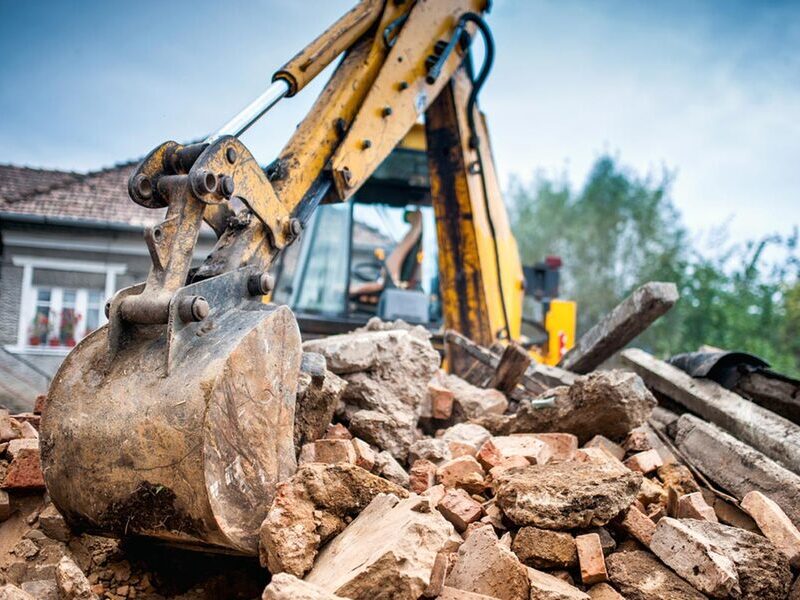
Tearing down a house isn’t a snap decision and for most homeowners in North and South Carolina, the cost is the first thing that needs a clear answer. The problem is that online estimates vary wildly, and generic national figures rarely reflect what you’ll actually pay in Charlotte, Rock Hill, Columbia, Concord, Gastonia, or other nearby North and South Carolina service areas. Material costs, labor rates, permit requirements, soil conditions, and hazardous materials all shift the final number significantly. This guide breaks down what house demolition actually costs in 2026, what drives the price, and what to watch out for before you sign a contract.
Average house demolition cost in North and South Carolina
Demolition pricing in North and South Carolina often runs below national averages in many markets, but the final cost still varies by city, county, structure size, access, permits, debris volume, and site conditions.
In the Charlotte metro area, a standard single-family home demolition often falls in the $8,000 to $18,000 range for homes around 1,500 to 2,500 square feet. Projects in nearby North Carolina service areas such as Concord, Gastonia, and Waxhaw can fall within a similar range, but the final price depends on access, foundation type, utility coordination, debris hauling, and whether hazardous materials are present.
In South Carolina service areas such as Fort Mill and Rock Hill, pricing is generally comparable. York County requirements, disposal routes, soil conditions, and site access can affect both cost and timeline.
As a general rule, many residential demolition projects are estimated at roughly $4 to $10 per square foot for a full teardown. A 1,800 sq ft home could land around $7,200 to $18,000 before additional line items such as permits, asbestos inspection, foundation removal, or unusual disposal requirements.
Cost breakdown by demolition type
Not every project is a full teardown. Understanding the type of demolition you need is the single biggest factor in controlling cost.
Full house demolition cost
Full demolition removes the entire structure, foundation included. This is the most expensive option and is typically chosen when a home is structurally compromised, condemned, or being cleared for new construction. Foundation removal adds $1,000 to $5,000 depending on depth and material. If you’re planning to build immediately after, read what to expect during a residential demolition project to understand every phase from permitting to site prep.
Small structure demolition cost
Smaller standalone structures such as sheds, detached garages, or old outbuildings usually cost less than a full house demolition. The final price still depends on size, access, materials, debris volume, and whether a slab or foundation must be removed. This is different from selective or partial demolition, where only part of a standing building is removed while the rest stays in place.
Cost of interior demolition
Interior demolition strips a home of walls, flooring, ceilings, and fixtures while leaving the shell intact. This is common for gut renovations and typically runs $1,000 to $5,000 depending on the scope. It requires the same permitting and utility disconnection protocols as exterior work — a step many homeowners underestimate. See the full breakdown on how to safely disconnect utilities before house demolition before starting any interior project.
The cost for house deconstruction
Deconstruction is a labor-intensive alternative where materials — bricks, lumber, fixtures, windows — are salvaged and removed by hand before heavy equipment arrives. It costs more upfront, often $15,000 to $25,000 for a full home, but salvaged materials can be sold or donated, and some homeowners use the approach to minimize landfill waste.
What’s included to house demolition price and what costs extra
A basic demolition quote from a reputable contractor typically covers equipment, operator labor, initial debris hauling, and site grading to level the lot. What it often doesn’t include:
Permits
In North Carolina, demolition permits are required for all structural removals under NC General Statute §160D-1110. In South Carolina, county and municipal requirements vary. Charlotte, Durham, Raleigh, Columbia, and Rock Hill all have their own permit offices and timelines. Permit fees themselves are relatively modest — $100 to $500 depending on jurisdiction — but the timeline matters. Applications can take anywhere from a few days to several weeks. If you’re unsure what’s required in your area, Bright LLC handles permitting coordination directly, including Charlotte’s specific process.
Asbestos and hazardous material inspection
North Carolina law requires a licensed asbestos inspection before any demolition begins, with a mandatory 10-day notice to the state’s Health Hazards Control Unit (HHCU) regardless of whether asbestos is found. If asbestos, lead paint, or mold is present, abatement adds $1,500 to $15,000+ to the project depending on severity and location. This is not optional — skipping it is both illegal and dangerous.
Debris hauling and disposal
Some quotes include haul-away in the base price; others charge separately. A full residential teardown generates a significant volume of concrete, wood, metal, and general waste. Confirm what’s included before signing. For more on what happens to material after demolition, see the complete guide to removing construction debris.
Foundation removal
If your quote covers “demolition” but not foundation removal, you may be left with a slab or basement walls that require a separate contract. Always clarify in writing.
Site grading
Once the structure is down and debris is cleared, the lot typically needs grading to level the soil and prepare for whatever comes next — whether that’s new construction, landscaping, or sale. Grading is sometimes bundled, sometimes not. If it’s a separate line item, expect $500 to $3,000 depending on lot size and terrain. Understanding the difference between clearing and grading helps you ask the right questions — Bright LLC’s guide on land clearing vs grading explains when you need one, both, or neither.
Location-specific factors in the Carolinas
Geography affects price more than most homeowners realize.
- In Charlotte and Mecklenburg County, urban density, traffic access for heavy equipment, utility coordination, and permit timelines can add cost. Infill lots in established neighborhoods usually require more planning than open rural sites.
- In Concord, Gastonia, and Waxhaw, lot size, access roads, older structures, soil conditions, and debris hauling distance can change the estimate. Larger suburban or semi-rural properties may allow easier equipment movement, but longer haul routes can still affect pricing.
- In Fort Mill and Rock Hill, York County requirements, soil conditions, utility coordination, and debris disposal routes can affect both the timeline and final cost. If your project is in York County, see our Rock Hill demolition services for local demolition planning and site preparation details.
- In additional North and South Carolina service areas, including Columbia, Monroe, Mooresville, Davidson, Statesville, China Grove, Locust, Marshville, Greensboro, High Point, and Winston-Salem, pricing depends on the type of structure, travel distance, permit requirements, debris volume, and whether the project involves house demolition, building demolition, or basement digging.
Key factors that shift your final price
Beyond location and project type, these variables have the biggest impact on your final quote:
- Structural size and materials. Concrete block and brick homes cost more to demolish than wood-frame construction. Heavier materials mean more equipment time and more haul trips.
- Site access. A home on a wide rural lot with easy equipment access costs less to demolish than a tight urban property with neighboring structures that must be protected.
- Age of the structure. Homes built before 1980 are most likely to contain asbestos or lead paint. Pre-inspection findings can significantly change the project budget.
- Season. In the Carolinas, spring (March–May) and fall (September–October) are the most efficient demolition windows — predictable weather, moderate temperatures, and less competition for permit approvals. Scheduling in late winter beats the summer rush when permit offices are busiest.
- Timing of planning. Budget an additional 10–20% buffer above your contractor’s quote for unexpected discoveries — buried tanks, unusual foundation depths, unmarked utility lines. This is standard practice on any demolition project.
What to ask before hiring a demolition contractor
Never rely on an online estimate alone. A reputable contractor will come to your property, assess actual site conditions, and provide a written quote with clear line items. Before signing, confirm: what’s included in debris removal, who pulls the permits, whether the price covers asbestos inspection and abatement if needed, and what the site will look like when work is complete.
Bright LLC serves Charlotte, Concord, Gastonia, Waxhaw, Fort Mill, and Rock Hill with full-service demolition, excavation, land clearing, debris removal, material delivery, and site preparation. The team also serves additional North and South Carolina areas for house demolition, building demolition, and basement digging projects, including Columbia, Summerville, Greensboro, High Point, Monroe, Mooresville, Davidson, Statesville, China Grove, Locust, and Marshville.
With clear estimates, demolition permit coordination when needed, debris haul-off, foundation or slab removal when included in the project scope, and site cleanup, the team helps homeowners understand the real cost of demolition before work begins.
Get a free demolition quote from Bright LLC — an on-site estimate with a real cost breakdown, not just a generic ballpark.