
Land clearing and grading: what’s the difference and when do you need both?
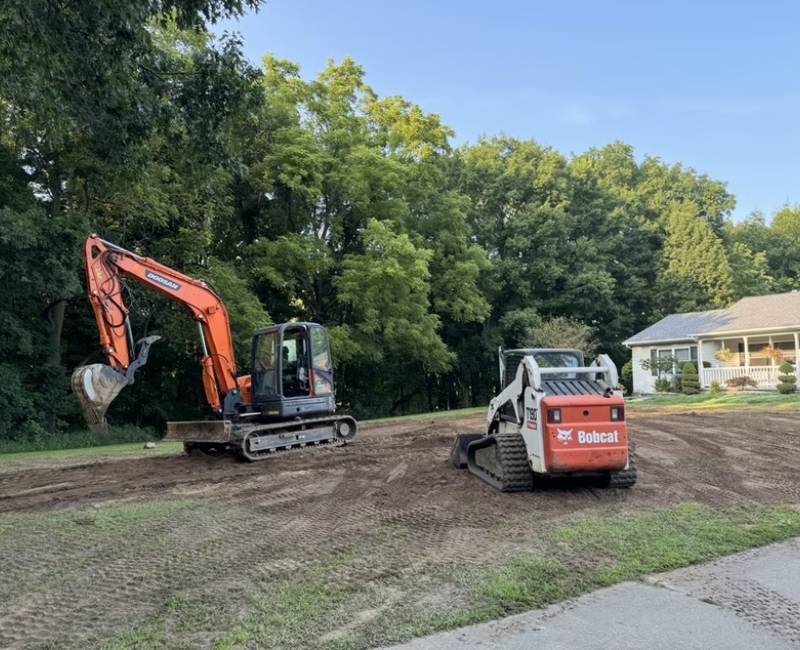
Land clearing and grading are two separate steps in site preparation. Land clearing removes trees, brush, stumps, rocks, and debris so the lot is open and workable. Grading comes after clearing and reshapes the soil to create the right slope, manage drainage, reduce erosion risk, and support the next construction phase. For many North Carolina projects, both steps work together: clearing creates access, and grading turns the cleared ground into a construction-ready surface.
| In short, land clearing removes what is in the way, while grading shapes the ground itself. If your lot is wooded, overgrown, rocky, or covered with stumps and debris, clearing comes first. If the site needs proper slope, drainage, compaction, or a stable surface for a driveway, foundation, lawn, or building pad, grading is usually needed after clearing. |
Key takeaways
- Land clearing comes first. It removes vegetation, stumps, rocks, debris, and other obstacles from the property.
- Grading shapes the ground. It creates the right slope, drainage path, elevation, and surface stability.
- Most build-ready sites need both. Clearing creates access; grading prepares the surface for construction, driveways, lawns, or landscaping.
- Permits and erosion control can matter. Larger or more sensitive land-disturbing projects may need erosion and sediment control review before work starts.
- Cost depends on site conditions. Lot size, tree density, slope, soil, access, hauling, and drainage needs affect the final scope.
What is land clearing?
Land clearing is the process of removing trees, brush, stumps, rocks, debris, and other obstacles from a piece of land. The goal is to create open, usable space for construction, access, farming, trails, landscaping, or future site work.
If your property is wooded or overgrown, Bright LLC’s land clearing service can help clear trees, brush, stumps, rocks, and debris before the next phase of site work begins.
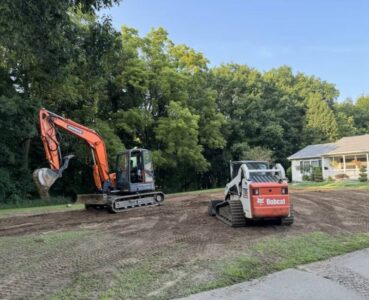
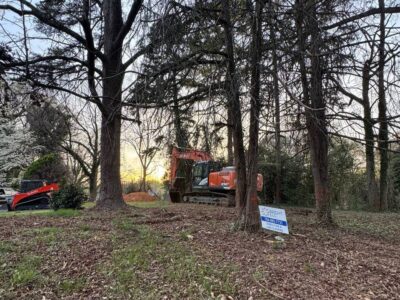
In North Carolina, this is often the first step on wooded, overgrown, or uneven properties. A contractor may use excavators, skid steers, forestry mulchers, chainsaws, or manual methods depending on the size of the lot, the trees or brush being removed, and what needs to be preserved.
Good clearing is not just about stripping a site bare. The crew should consider access, soil exposure, existing drainage, trees to keep, nearby structures, and whether the project may disturb protected areas or require erosion controls.
What is grading?
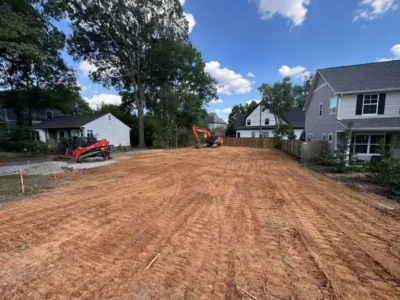
Grading is the process of moving and shaping soil after the site has been cleared. It can level high spots, fill low areas, create a slope, direct water away from structures, and prepare a stable surface for the next phase of the project. In simple terms, land grading turns cleared ground into a usable surface with the right slope, elevation, and drainage path.
For projects where drainage, slope, or surface stability is the main issue, Bright LLC’s grading and leveling service helps shape the land for a safer, more usable surface.
Grading may include rough grading and finish grading. Rough grading prepares the general elevation and drainage pattern. Finish grading creates a smoother final surface for lawns, driveways, building pads, or landscaping.
A good grading plan helps reduce water pooling, erosion, soft spots, and foundation or driveway problems. This is why grading is often just as important as clearing on construction projects.
Land clearing vs grading: the main differences
Land clearing and grading are related, but they solve different problems. Clearing removes what is on the land. Grading changes the land surface itself.
| Feature | Land clearing | Land grading |
|---|---|---|
| Main purpose | Remove vegetation, stumps, rocks, debris, and surface obstacles. | Shape soil to create slope, drainage, elevation, and surface stability. |
| Typical order | Usually first. | Usually after clearing. |
| Main equipment | Excavators, skid steers, mulchers, chainsaws, loaders. | Graders, bulldozers, compactors, skid steers, excavators. |
| Best fit | Wooded lots, overgrown areas, access paths, raw land. | Driveways, pads, lawns, drainage correction, construction-ready surfaces. |
| Main risk if skipped | Poor access, hidden stumps, debris, blocked work area. | Drainage problems, uneven surface, soft areas, erosion, unstable base. |
| In short, clearing gives access to the site. Grading makes that cleared site usable for the next phase. For a deeper clearing-only read, see the complete guide to land clearing before new construction. |
How land clearing and grading work together
Land clearing and grading are often part of the same site preparation sequence. Clearing opens the site by removing vegetation, stumps, rocks, debris, and other surface obstacles. Grading then shapes the exposed ground so the property has the right elevation, slope, drainage path, and surface stability.
For a construction project, this order matters. Heavy equipment needs access before grading can be done correctly. Once the site is cleared, the contractor can see the actual soil conditions, low spots, drainage problems, and slope changes that need to be corrected before the next phase begins.
On North Carolina properties, this is especially important on wooded lots, sloped lots, clay-heavy soils, rural driveways, building pads, and sites where stormwater needs to move away from future structures.
| 1. Site review | 2. Clearing | 3. Grading | 4. Site protection |
|---|---|---|---|
| Access, slope, soil, drainage, utilities | Trees, brush, stumps, rocks, debris | Elevation, rough grade, finish grade | Drainage path, erosion control, stable surface |
A typical land clearing and grading project moves from site review to clearing, grading, and site protection.
Land clearing and grading process
A typical land clearing and grading project starts with a site review. The contractor checks access, slope, soil conditions, drainage patterns, trees to remove or preserve, and any structures, utilities, or protected areas that may affect the work.
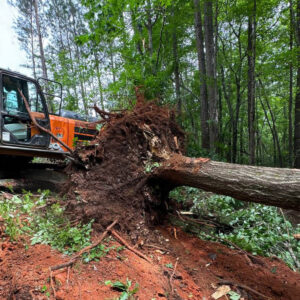
The first active step is clearing. Crews remove brush, trees, stumps, rocks, surface debris, and other obstructions, using excavators, skid steers, forestry mulchers, chainsaws, or a mix of mechanical and manual clearing. If the work continues into deeper digging, trenching, or larger soil movement, Bright LLC’s excavation service can support the next phase of site preparation.
After the lot is open, grading begins. The crew moves and shapes soil to create the right elevation, slope, and drainage path. Rough grading prepares the site for the next construction phase, while finish grading creates a smoother final surface for lawns, driveways, pads, or landscaping. For construction site grading in North Carolina, this step is especially important because drainage, soil stability, and equipment access can affect the rest of the project. If there are soil stability questions before digging or grading, see the guide on soil testing before excavation.
The goal is not just to make the land look clean. The goal is to create a safer, more stable, and more usable site for the next stage of the project.
Do you always need grading after land clearing?
Not always. Some projects only need land clearing — for example, opening a trail, removing brush, cleaning up an overgrown area, or creating access without changing the shape of the ground.
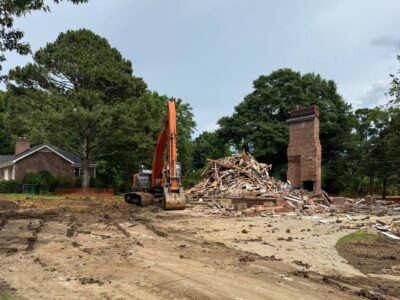
Grading becomes important when the property needs a specific slope, level surface, drainage path, driveway base, building pad, lawn area, or stable construction surface. Most home building, driveway, commercial site preparation, and demolition follow-up projects need grading after clearing.
Skipping grading can create problems later. Water may collect in the wrong place, soil may stay soft, and the next crew may not have a stable surface to work from. The right choice depends on the condition of the land and the next phase of the project.
Permits, drainage, and erosion control in North Carolina
Land clearing and grading can disturb soil, change drainage patterns, and expose loose ground to stormwater. Permit and erosion control requirements should be checked before work begins, especially on larger lots, sloped sites, or projects near streams, wetlands, or protected areas.
EPA construction stormwater guidance treats clearing, grading, and excavating as construction activities that may require stormwater controls once land disturbance reaches certain thresholds. In North Carolina, NC DEQ Erosion and Sediment Control FAQs state that an E&SC plan is required when land-disturbing activity will disturb more than one acre. Charlotte also has local soil erosion and sedimentation rules under UDO Article 28.
A professional contractor should help identify whether the project may need erosion control planning, stabilized access, silt fence, drainage planning, slope stabilization, or other site protection measures before clearing and grading begin.
What affects land clearing and grading cost?
The cost of land clearing and grading, including lot clearing and grading work, depends on the condition of the property and the amount of work needed before the site is ready. A small open lot with light brush is very different from a wooded, sloped, or rocky property that needs stump removal, hauling, drainage correction, and rough grading.
| Cost factor | Why it matters |
|---|---|
| Lot size | Larger areas require more labor, equipment time, and planning. |
| Tree, brush, and stump density | Heavy vegetation and stump removal increase the clearing scope. |
| Slope and drainage problems | Uneven or poorly draining land may need more grading work. |
| Soil condition | Wet, clay-heavy, rocky, or soft soils can slow equipment and affect compaction. |
| Equipment access | Tight access can limit machinery and extend the schedule. |
| Debris and hauling | Stumps, rocks, old material, and excess soil may need removal. |
| Permit or erosion control needs | Larger or sensitive projects may require extra planning and site protection. |
The most reliable way to price the work is with an on-site review, since the contractor needs to see what must be cleared, how the ground needs to be shaped, and whether drainage or erosion control will affect the plan.
Why both processes matter in construction projects
On wooded or sloped lots around Charlotte, Gastonia, Greensboro, Concord, and nearby North Carolina areas, the risk is usually practical: equipment access becomes harder, water collects in the wrong places, and soft or uneven ground can delay the next phase of construction. That is why land clearing and grading should be planned together, not treated as two unrelated tasks.
Clearing opens the site. Grading controls the surface. When both are done correctly, the property is easier to access, safer to build on, and better prepared for drainage, foundation work, driveway installation, or landscaping.
Choose the right contractor for land clearing and grading
The right contractor should look beyond the visible trees and brush. A good site preparation plan considers access, soil, slope, drainage, equipment needs, debris removal, erosion control, and the next phase of work. For property clearing and grading, the contractor should understand both the removal work and the surface preparation needed after the lot is open.
Bright LLC helps property owners, builders, and contractors prepare land for construction, driveways, landscaping, demolition follow-up, and other site work across North Carolina service areas. You can also review a completed land clearing and grading in Greensboro, NC project to see how clearing and grading work together in practice.
Before work starts, the site should also be checked for underground utility locating needs. In North Carolina, NC811 should be contacted before digging so utility lines can be marked before excavation or grading work begins.
| Need help with demolition, excavation, land clearing, or grading?
→ Contact Bright LLC for a free quote and prepare your site the right way. |
FAQ about land clearing and grading
Is land clearing the same as grading?
No. Land clearing removes trees, brush, stumps, rocks, and debris from the property. Grading reshapes the ground after clearing so the site has the right slope, drainage, and surface stability.
What comes first, land clearing or grading?
Land clearing usually comes first. The site needs to be open and accessible before the contractor can move soil, correct slopes, compact areas, or prepare a stable surface through grading.
Do you always need grading after land clearing?
Not always. A simple trail, pasture area, or brush removal project may only need clearing. Most construction projects, driveways, building pads, and drainage-sensitive lots need grading after clearing.
Can one contractor handle both land clearing and grading?
Yes, if the contractor has the right equipment and site preparation experience. Using one crew for both steps can make planning easier, since clearing, soil movement, access, drainage, and final surface preparation are handled together.
Does land clearing and grading require a permit in North Carolina?
It depends on the size, location, slope, drainage conditions, and local rules. Larger land-disturbing projects, projects near protected areas, or work in certain watersheds may require erosion control approval or a land disturbance permit.
Sources and further reading
- EPA — Stormwater Discharges from Construction Activities
- NC DEQ — Erosion and Sediment Control FAQs
- NC DEQ — Erosion and Sediment Control Application
- Charlotte UDO — Article 28, Soil Erosion & Sedimentation Control
Clear the way — call a professional
Need help with demolition, excavation, or land clearing? Don’t wait — our crew is ready 24/7 to take on your project safely and efficiently.
Related Services
Excavation
House demolition
Get in touch today