
Trenching for utilities: what to expect when installing water, sewer, or electric lines
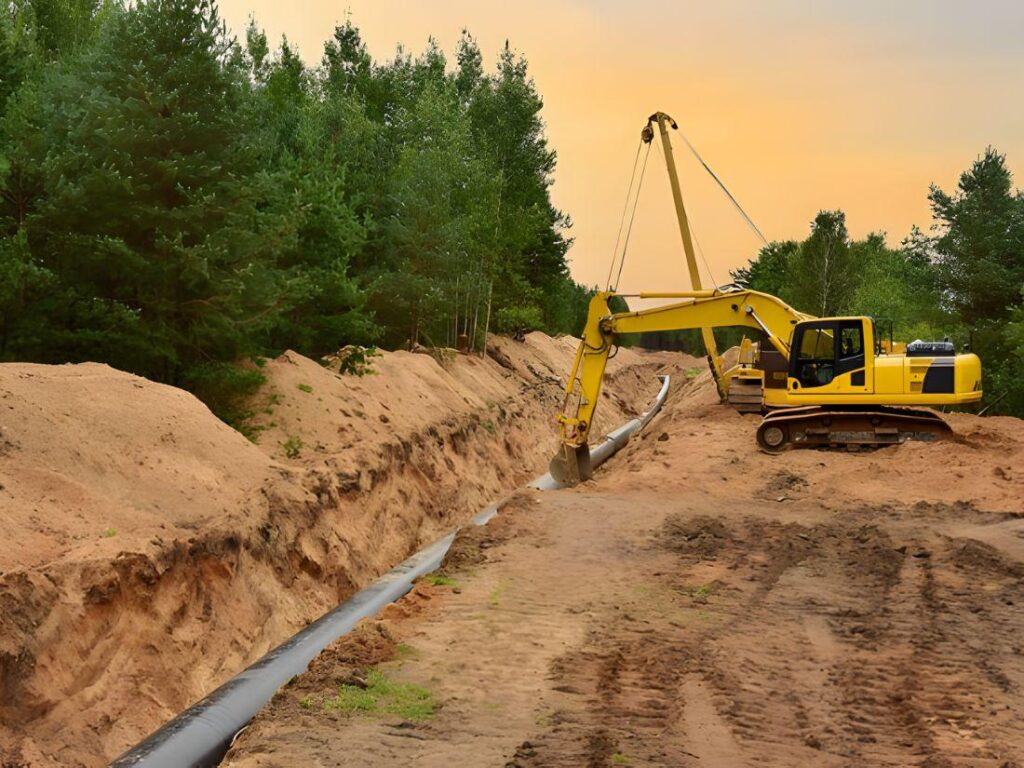


It looks like the simplest job on the site. Dig a ditch, drop in the pipe or the conduit, cover it back up. How hard can a trench be?
Hard enough that North Carolina has a law about it, OSHA has a whole standard for it, and a buried utility line gets struck somewhere in the state about every nine minutes. A trench sits at the intersection of things you cannot see, rules you cannot skip, and a physical hazard that has killed workers who treated it casually. The pipe is the easy part. The depth, the permits, the locate call, the inspection, and the safe walls around you are where the real work lives.
Whether you are running a new water service to a build, tying in a sewer lateral, or pulling power to a detached garage, the sequence is what protects you. Call 811 and wait the required days. Match the depth to the utility, because water, sewer, and electric each follow a different rule. Pull the permits, pass the inspection before you backfill, and never underestimate a five-foot hole. This guide walks through the whole process, what it costs, and what to expect at every step.
Key takeaways
- Call 811 first, every time. In North Carolina, the law requires at least three full working days’ notice before you dig. It is free, and a buried line is hit somewhere in the state about every nine minutes.
- Depth depends on the utility. Water follows the frost line, sewer follows gravity, and electric follows electrical code. There is no single trench depth.
- Water and sewer cannot share a trench. Code separates them to prevent contamination. Electric can often share a joint trench with gas or communications.
- Budget by the linear foot. Trenching runs roughly $5 to $12 per foot for a basic dig, and more for water, sewer, and deep or rocky runs.
- A trench five feet deep can be deadly. Cave-ins are a leading excavation killer, which is the main reason to hire a licensed, insured crew.
Why trenching is more involved than it looks
Running a new water, sewer, or electric line sounds simple. You dig a ditch, drop in the pipe or conduit, and cover it back up. In practice, trenching sits at the intersection of buried hazards, building codes, permits, inspections, and real physical danger. Getting any one of them wrong is expensive, and sometimes worse.
At Bright LLC we handle excavation and site work across the Charlotte area, so we run utility trenches as part of new builds, teardown and rebuild projects, and site prep. This guide walks through what actually happens, in order, and what to expect at each step.
A trench is not just a hole. It is a code-governed, permitted, and potentially dangerous piece of construction.
Step one: call 811 before anyone digs
This is the non-negotiable first move, and in North Carolina it is the law. The Underground Utility Safety and Damage Prevention Act (NC General Statute Chapter 87, Article 8A) requires anyone who excavates or demolishes to notify NC811 at least three full working days before starting. That law took effect in 2014, after a 2010 death in which an excavator bored into an unmarked electric cable.
Here is how the process works:
- You submit a locate request to NC811 by phone (811 or 1-800-632-4949) or online.
- Member utilities have three full working days, starting the next business day, to mark their lines or tell you there is no conflict.
- Locators mark lines with the standard color code: red for electric, yellow for gas, orange for communications, blue for water, green for sewer, white for the proposed dig, and pink for survey marks.
- NC811 marks only publicly owned lines. You must hire a private locator for private lines, such as a line to a detached garage or a well pump.
Once lines are marked, respect the tolerance zone: 24 inches on each side of the mark, plus the width of the line itself. Inside that zone, you dig by hand, not by machine.
Calling 811 is free and legally required. Skipping it can mean a severed gas main, a killed power feed, or a five-figure repair bill.
How deep does each utility line go?
Depth is where most people guess wrong. Each utility answers to a different rule, so the depths are not the same.
- Water lines must sit below the frost line and below the reach of traffic loads, with a common minimum of about 12 inches of cover. North Carolina’s shallow frost line still leaves water vulnerable, so deeper is often better.
- Sewer lines are the outlier. Their depth is set by gravity, not a number. A sewer lateral needs a continuous downward slope, usually around a quarter inch of fall per foot, so its depth grows the farther it runs from the house to the main. That makes sewer the deepest and least forgiving line.
- Electric lines follow electrical code. Direct-buried cable is typically 24 inches deep, while conduit can be shallower at around 18 inches, and low-voltage lighting can be as little as 6 inches.
Because these depths vary by code edition, utility owner, and site, always confirm with your local building department and the utility before digging.
Can water, sewer, and electric share one trench?
Sometimes, and sometimes never. The rules exist to prevent contamination and interference.
- Water and sewer cannot share a trench. Codes require separation, both horizontal and vertical, and the water line generally sits above the sewer line to protect drinking water from contamination.
- Electric, gas, and communications can often share a joint trench when the required separations are maintained, which saves digging.
| Utility | Typical depth | What sets the depth | Key rule |
|---|---|---|---|
| Water | ~12 in cover or more | Frost line and traffic loads | Cannot share a trench with sewer |
| Sewer | Varies, often deepest | Gravity slope to the main | Continuous downward grade required |
| Electric | 24 in buried, 18 in conduit | Electrical code and voltage | Can share a joint trench with gas or comms |
Table 1. How water, sewer, and electric lines compare underground.
The full trenching process, step by step
Here is what a professional utility trench job actually looks like from start to finish.
| Step | What happens |
|---|---|
| 1. Plan the route | Map the shortest, straightest path from the connection point to the structure |
| 2. Locate | Call NC811 and hire a private locator for any private lines |
| 3. Permit | Pull the plumbing, electrical, or right-of-way permits your project requires |
| 4. Excavate | Dig to code depth, with a protective system if the trench reaches five feet |
| 5. Bed and lay | Add bedding material, lay the pipe or conduit, and add tracer wire and warning tape |
| 6. Inspect | Pass the required inspection before any backfill covers the line |
| 7. Backfill and restore | Compact the backfill in lifts, then regrade and reseed the surface |
Table 2. The seven stages of a utility trench installation.
The inspection step matters more than people expect. Most jurisdictions require an inspection before you backfill. Cover the line too soon and you may have to reopen the trench at your own cost.
What trenching costs
Trenching is usually priced by the linear foot, and the number climbs with depth, soil hardness, and the utility involved.
A few cost realities worth planning around, based on national data from sources like HomeAdvisor:
- A basic trench runs about $5 to $12 per foot, or roughly $400 to $1,200 per 100 feet.
- Sewer is the priciest because it is deepest, often $25 to $40 per foot.
- Directional boring (a trenchless method) costs $10 to $30 per foot but lets crews run a line under a driveway or sidewalk without tearing it up.
- Long runs often cost less per foot, since setup is a fixed cost spread over more distance.
- Rock and hand-digging cost more. Ask any contractor how they price hitting rock before you sign.
| Cost item | Typical range |
|---|---|
| Basic trench dig | $5 to $12 per linear foot |
| Water line, installed | $15 to $25 per linear foot |
| Sewer line, installed | $25 to $40 per linear foot |
| Electric line, installed | $5 to $15 per linear foot |
| Directional boring | $10 to $30 per linear foot |
| Plumbing permit (water/sewer) | $150 to $500+ |
| Electrical permit | $100 to $400+ |
| Street or right-of-way cut permit | $200 to $800+ |
| Getting utilities to raw land | $6,500 to $30,000 |
Table 3. Trenching and utility cost quick reference. Confirm current local pricing.
Trench safety: the part that is not optional
This is the reason trenching is not a casual weekend project. Trench collapses kill workers every year, and they happen fast.
Under OSHA’s excavation standard (Subpart P), any trench five feet deep or more requires a protective system, such as sloping the walls, shoring them, or using a trench box, unless the excavation is in stable rock. At 20 feet, the system must be engineered. A competent person must inspect the trench daily.
The physics are unforgiving. A single cubic yard of soil weighs around 3,000 pounds, about the weight of a small car. A worker buried to the waist cannot free themselves, and a full collapse gives no warning.
A trench five feet deep can kill. One cubic yard of soil weighs about as much as a small car, and a cave-in gives no warning.
This is why we keep spoil piles back from the edge, use protective systems, and treat every deep trench as a hazard. It is also why deep utility trenching belongs with a licensed, insured crew, not a rented trencher and good intentions. You can read the full standard on OSHA’s trenching and excavation page.
Common trenching mistakes
- Digging before the locates are done. The single most dangerous and expensive error.
- Guessing at depth. Too shallow risks damage and code failure. Wrong sewer slope means it will not drain.
- Putting water and sewer in one trench. A code violation and a contamination risk.
- Backfilling before inspection. You may have to dig it all back up.
- Skipping tracer wire and warning tape. These protect the next person who digs, and often you.
- Underestimating the surface restoration. Grading and reseeding the trench line is real work, not an afterthought.
This article is general information, not code or legal advice. Requirements vary by jurisdiction and utility. Confirm depths, permits, and separations with your local authority before digging.
How this fits with your site work
Utility trenching rarely happens alone. It is usually one piece of preparing a site, alongside land clearing and grading, foundation work, and debris removal. Doing them in the right order, with the same crew that understands the grade and drainage, keeps the project clean and avoids reopening finished ground.
Bright LLC provides excavation, trenching, grading, and site preparation across Charlotte, Concord, Huntersville, Matthews, Gastonia, and the surrounding Carolinas. See finished work on our project gallery, read more guides on our blog, or learn about our team on the about page.
Conclusion
Trenching for water, sewer, or electric is straightforward when you respect the sequence. Call 811 and wait the required three working days. Confirm the right depth for each line, since water, sewer, and electric each follow a different rule. Keep water and sewer apart. Pull your permits, pass inspection before backfill, and treat any deep trench as the serious hazard it is.
The dig itself is the cheap, fast part. The locate, the permit, the correct depth, and the inspection are what protect you.
Planning to run new lines on your property? Contact Bright LLC for a free excavation and trenching quote, and we will handle the locates, depth, and site restoration the right way.
Frequently asked questions (FAQ)
Do I have to call 811 before digging in North Carolina?
Yes. North Carolina law requires anyone excavating or demolishing to notify NC811 at least three full working days before starting. The service is free. Member utilities then mark their lines or confirm no conflict. Skipping this step is illegal and dangerous.
How deep should water, sewer, and electric lines be buried?
It depends on the utility. Water lines commonly need at least about 12 inches of cover and should sit below the frost line. Sewer depth is set by gravity slope and is often the deepest. Direct-buried electric is typically 24 inches, with conduit around 18 inches. Confirm exact depths with local code.
Can water and sewer lines go in the same trench?
No. Building codes prohibit it to prevent contamination of drinking water. They require horizontal and vertical separation, with the water line placed above the sewer line. Electric, gas, and communications lines can often share a joint trench when properly separated.
How much does utility trenching cost per foot?
A basic trench runs about $5 to $12 per linear foot. Water lines run roughly $15 to $25, sewer $25 to $40, and electric $5 to $15, installed. Directional boring under a driveway costs $10 to $30 per foot. Rock, hard soil, and hand-digging increase the price.
Do I need a permit to trench for utilities?
Usually yes. Water and sewer work generally needs a plumbing permit, electrical work needs an electrical permit, and cutting a street or right-of-way needs a separate permit. Inspections are typically required before backfill. Confirm with your local building department.
How long does a utility trench take?
Most single-utility residential trenches take one to two days of actual digging, plus another one to three days for permits, locates, and inspection. Machine trenching 100 feet can take just two to three hours, while hand-digging the same length can take all day.
Does Bright LLC do excavation and trenching?
Yes. We handle excavation, utility trenching, grading, and full site preparation across the Charlotte metro and surrounding Carolinas, including the locates, correct depths, inspections, and surface restoration. Request a free quote.
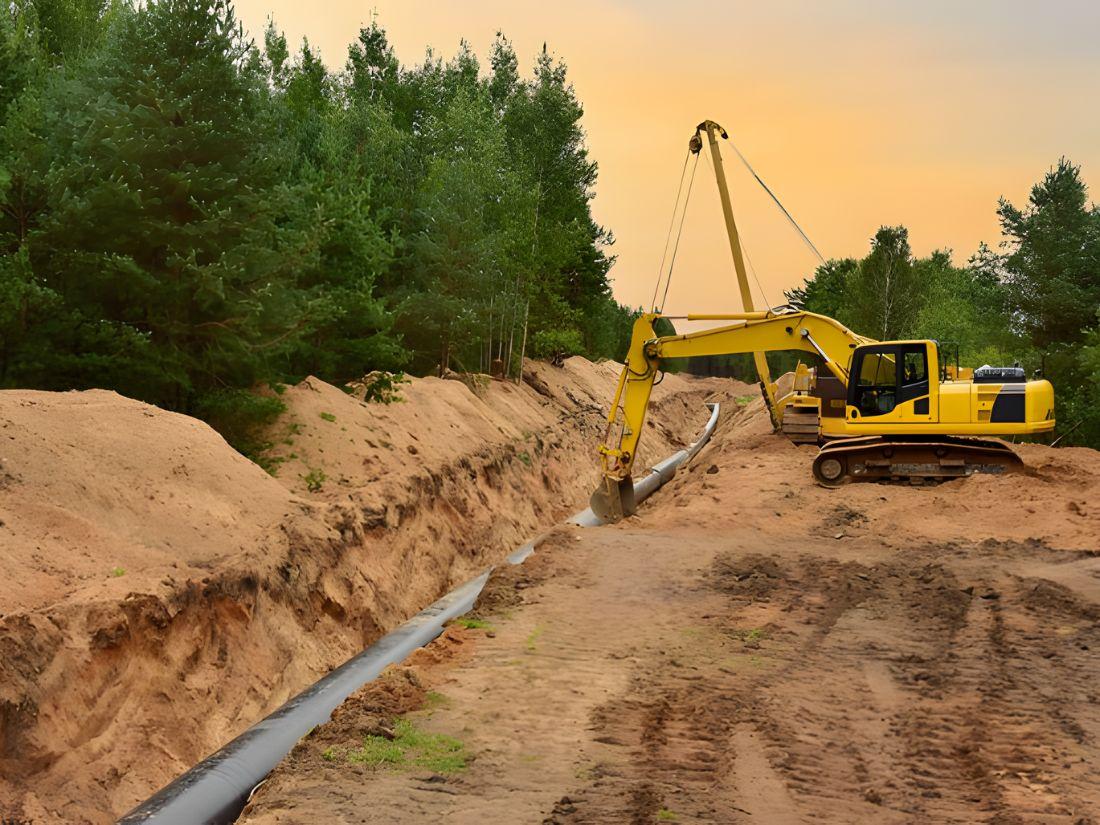
Need water, sewer, or electric lines run the right way?
Bright LLC handles locates, trenching, depth, and restoration across the Charlotte area
Related Services
Excavation
Land clearing
Debris removal
Get in touch today