
The difference between residential and commercial excavation


Excavation is the backbone of any construction project, whether you are building a dream home or preparing the ground for a retail complex. While the work may look similar from the outside with big machines moving dirt, the reality is more nuanced. Residential and commercial excavation differ in scope, regulations, and requirements. For business owners, understanding these differences is crucial to ensure your investment is safe, compliant, and future-proof.
Why excavation projects are not the same for homes and businesses
Homeowners usually think about digging for basements, driveways, or drainage. Business owners, however, face projects where the land must carry the weight of large structures, heavy foot traffic, and utilities designed to serve hundreds of people. That’s why commercial excavation services involve more planning, larger budgets, and stricter oversight compared to residential excavation services.
Save this checklist that will help you decide which type of excavation is optimal for your project. The commercial digging differ from residential in:
- scale of work – homes need limited excavation, while businesses often require grading and digging across multiple acres;
- load requirements – residential sites support a single structure, but commercial sites must handle heavy buildings, parking lots, and constant traffic;
- utility needs – commercial properties demand extensive underground systems for water, sewer, gas, and electricity;
- compliance rules – businesses face stricter zoning, safety, and environmental regulations;
- budget and timeline – residential projects are shorter and less costly, while commercial excavation involves higher investment and longer schedules.
What defines residential vs commercial excavation work
At its core, residential excavation is about preparing a lot for a single home or a small housing development. It focuses on creating a safe foundation, installing septic systems, grading land, and ensuring proper water flow.
Commercial excavation, on the other hand, prepares sites for businesses, warehouses, hospitals, or multi-story buildings. These projects involve larger crews, heavy equipment, stricter safety measures, and compliance with a wide range of local, state, and federal codes.
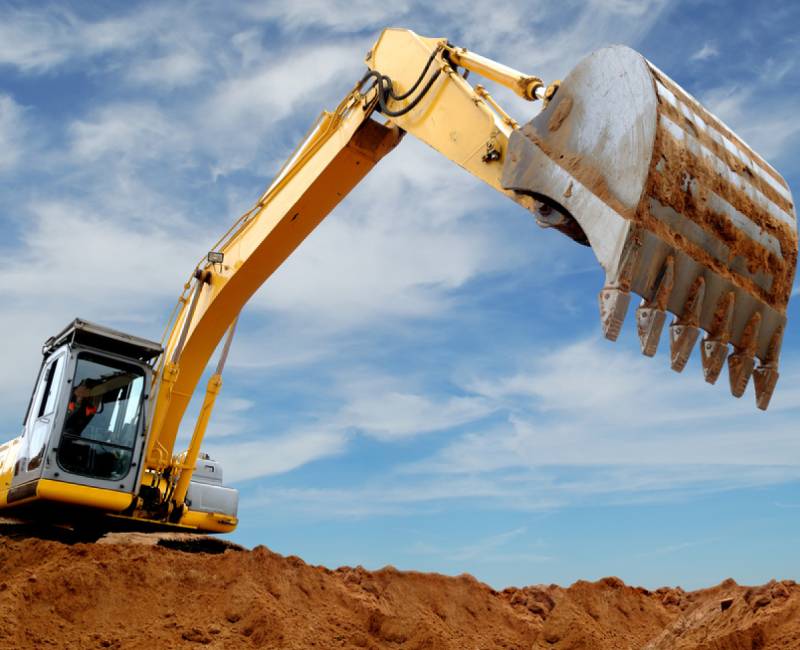
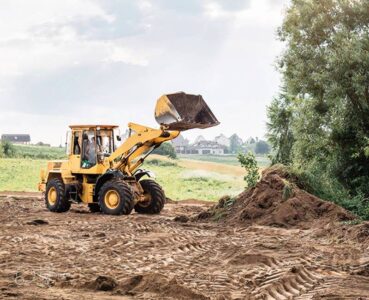
As an example. One obvious difference between residential and commercial excavation is the scale of equipment used. In commercial projects, you will often see larger, more robust machinery operating to handle the daunting tasks required. This contrasting size and power of equipment make it noticeable even at a first glance.
Here is a brief table that will guide you the difference between residential and commercial excavation projects.
|
Aspect |
Residential excavation |
Commercial excavation |
|
Project scale |
Single homes, driveways, small lots |
Large buildings, complexes, multi-acre sites |
|
Soil moved |
Hundreds of cubic yards |
Thousands of cubic yards |
|
Equipment |
Small excavators, backhoes |
Heavy bulldozers, scrapers, truck fleets |
|
Crew size |
2–5 workers |
Large specialized crews |
|
Regulations |
Basic local permits |
Multiple permits, strict safety & compliance |
|
Timeline |
Days to weeks |
Weeks to months |
|
Cost structure |
Simple project-based |
Detailed, based on commercial excavation cost per cubic yard |
Residential excavation in practice
Typical project size and site conditions
For most homeowners, residential excavation projects stay small. A residential excavation contractor typically deals with one building site, removing a few hundred cubic yards of soil at most. The land is often in neighborhoods with limited space, so machines must maneuver carefully without disturbing surrounding homes.
The advantages of residential excavation include speed and predictability. Site conditions are relatively straightforward, and residential excavation companies can often finish within days, depending on soil stability and weather.
Equipment and crew requirements for homeowners
Home projects don’t usually require the biggest machines or crews. A residential excavation contractor may bring in a small excavator, a backhoe, and a two-to-five-person team. Since the scale is limited, residential excavation contractors can keep costs manageable for homeowners.
Business owners should note: if you’ve dealt with excavation at home, don’t assume the same simplicity applies to your future commercial site. To ensure a successful commercial excavation project, consider consulting a commercial excavation specialist early in the planning process. By doing so, you can gain insights into site-specific challenges, compliance requirements, and budget considerations that are crucial for large-scale operations. Planning ahead with expert guidance can make a significant difference in avoiding potential pitfalls and ensuring your project stays on track.
Bright LLC project on residential excavation in North Carolina
One of our recent residential excavation projects took place just outside Charlotte, North Carolina, where a homeowner planned to build a two-story family home on a wooded lot with uneven terrain. The main challenge was a steep slope on the property, which caused drainage problems and threatened the stability of the planned foundation. Our team began with soil testing and grading analysis to identify the weak points, then carefully cleared the site while preserving natural trees at the perimeter. Using compact excavators and precision grading equipment, we reshaped the slope, installed a drainage system to redirect runoff, and dug a stable foundation pit that met both engineering and local code requirements. By coordinating closely with the homeowner and inspectors, Bright LLC turned a difficult site into a safe, build-ready property—delivered on time and within budget.
Commercial excavation in practice
Scale, depth, and complexity of business projects
Business projects take excavation to another level. Preparing ground for a hotel or manufacturing plant requires removing and relocating thousands of cubic yards of soil. Here, commercial excavation companies deploy large bulldozers, scrapers, and fleets of dump trucks.
Because of the scale, commercial excavation contractors must calculate commercial excavation cost per cubic yard precisely. These calculations factor in not only soil removal but also transportation, landfill fees, and backfilling. Small mistakes in estimation can snowball into budget overruns that business owners cannot afford.
Generally, commercial excavation costs can range from $50 to $200 per cubic yard for soil removal or $100 to $300 per hour for equipment with an operator, depending on the project specifics and location. Get a free quote precisely for your project.
Permits, safety rules, and compliance demands
Unlike a backyard dig, commercial excavation requires layers of approval. Zoning, environmental regulations, and safety compliance are non-negotiable. Business projects often involve coordination with multiple agencies and inspections at each stage.
Compliance covers far more than just permits. Excavators must handle soil testing, erosion control, traffic management near the site, and OSHA safety standards. Common compliance requirements include adhering to environmental regulations to prevent pollution, ensuring safety measures are in place to protect workers and nearby residents, meeting zoning laws that dictate land use, and following local building codes. For business owners, this means you need a contractor who has deep experience with compliance—not just someone with a backhoe.
Bright LLC project on commercial excavation in North Carolina
In Concord, North Carolina, Bright LLC managed a large-scale commercial excavation project for a new distribution warehouse covering nearly 80,000 square feet. The site was an old industrial lot with compacted soil, buried debris, and uneven ground that posed serious risks for the future concrete slab foundation. Our first step was conducting extensive soil testing and environmental checks to confirm stability and identify contamination hotspots. The crew then brought in heavy bulldozers and truck fleets to remove thousands of cubic yards of unsuitable soil, while coordinating debris disposal to meet environmental compliance standards. Once the ground was cleared, we regraded the entire site, installed engineered fill, and compacted the base to handle heavy truck traffic and industrial loads. By sequencing the work in phases (site clearing, deep excavation, backfilling, and drainage installation) we ensured the warehouse developer received a level, code-compliant site ready for vertical construction without delays or budget overruns.
Main challenges that set commercial excavation apart
Several issues make commercial excavation services more complex than residential work:
- Soil variability: a business project may span several acres, with shifting soil conditions across the site. Soil testing is critical to avoid costly surprises.
- Utility coordination: commercial properties need robust water, sewer, gas, and electrical systems. Excavators must plan trenches and underground utility placement with precision.
- Public safety: excavation often happens near busy roads or in urban centers, requiring advanced traffic control and fencing.
- Environmental impact: runoff, dust, and noise have larger consequences on commercial sites, especially if the project is in a regulated area.
Why hiring the right contractor makes the difference
For homeowners, hiring among residential excavation contractors is often a matter of trust and affordability. But for businesses, choosing among commercial excavation companies can determine the success of your entire project. The right contractor ensures compliance, keeps the budget on track, and avoids costly delays.
Business owners should look for:
- Proven track record with residential and commercial excavation
- Ability to provide accurate estimates of commercial excavation cost per cubic yard
- Strong safety and compliance record
- Capacity to handle unexpected site conditions
Working with experienced contractors saves you money, reduces liability, and gives peace of mind that your site is properly prepared for construction.
Work with Bright LLC for excavation in North and South Carolina
At Bright LLC, we bring years of experience in both residential excavation and commercial excavation services near you in North and South Carolina. Whether you need to clear a lot for a new home or prepare acres of land for a commercial build, our team has the expertise, equipment, and compliance knowledge to do it right.
Projects we can realize for you
For residential excavation, Bright LLC handles projects that prepare private properties for safe, lasting construction. These are usually smaller in scale but require precision to ensure drainage, grading, and foundations are reliable. Call us for:
- house foundations and basements;
- driveways, retaining walls, and drainage systems;
- pool excavation and backyard grading.
For commercial excavation, we take on large, complex projects that support business developments and public infrastructure. These require heavy machinery, large crews, and strict regulatory compliance. Contact our team for:
- site preparation for warehouses, retail centers, and office buildings;
- utility trenching for water, sewer, gas, and electrical systems;
- large-scale grading, backfilling, and stormwater management systems.
Call a professional for free quote on excavation
Need expert excavation for your site prep? From grading to trenching and foundation work, our team is available around the clock to handle your project with precision and care.
Related Services
Excavation
Land clearing
House demolition
Get in touch today