How to level a yard: DIY fixes vs professional regrading
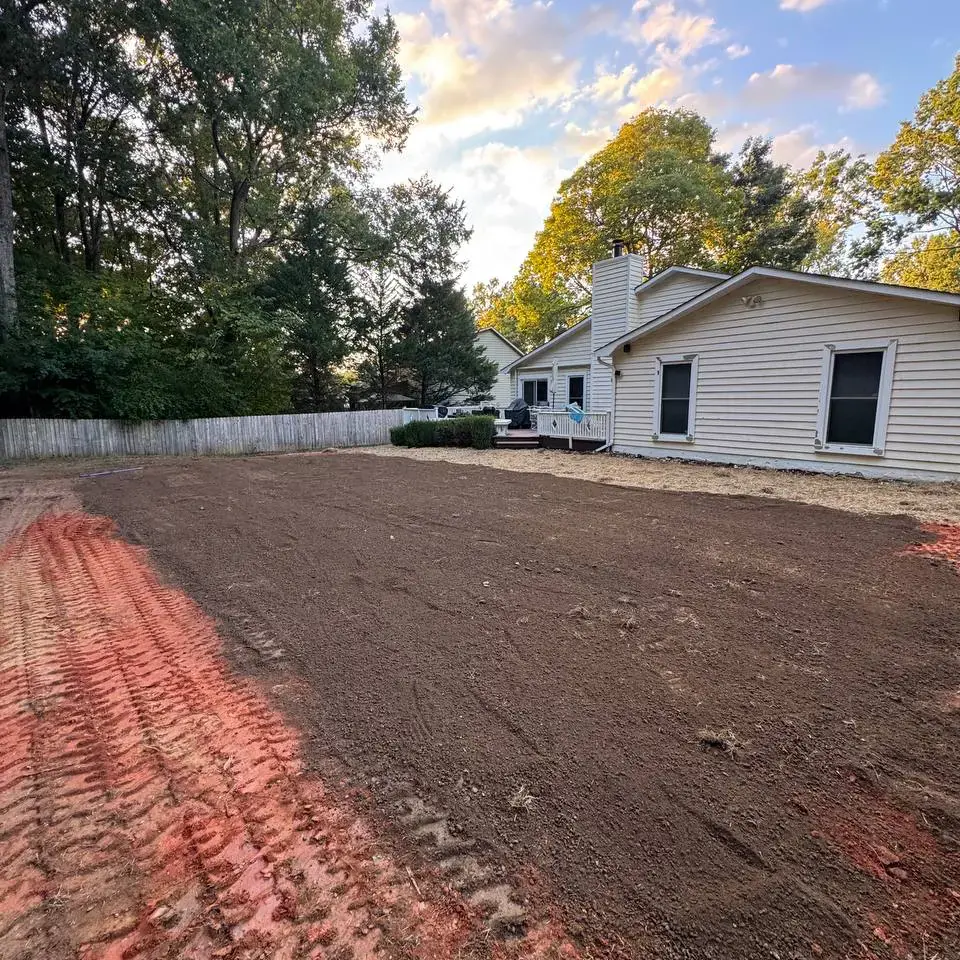
A bumpy, uneven yard is annoying to mow and worse to look at, but not every lumpy lawn is a big project. Some problems you can fix yourself in a weekend with a bag of soil and a rake. Others are warning signs that water is heading toward your foundation, and those need a professional with a machine and a plan. The trick is knowing which is which. This guide shows you how to level a yard, where do-it-yourself fixes work, and the three situations where you should stop and call for professional regrading.
Key takeaways
- Minor bumps and shallow low spots are a DIY job. Topdressing with a soil mix handles small, cosmetic unevenness.
- Three problems need a pro: a yard that slopes toward the house, standing water that will not drain, and large volumes of soil to move or reshape.
- Leveling and grading are not the same. Leveling smooths the surface; grading sets the slope so water runs the right way.
- Yard grading cost ranges roughly from $0.50 to $2 per square foot for simple work, and $3 to $5 per square foot for a full regrade with a new base.
- When drainage is involved, DIY stops. Getting the slope wrong can push water toward your foundation instead of away from it.
How to level a yard: first figure out what is actually wrong
Before you move any dirt, look at why the yard is uneven. The cause decides whether this is a rake-and-soil afternoon or a job for equipment.
- Small bumps and dips from foot traffic, old roots, or settling are cosmetic. These are the classic DIY fix.
- A yard that slopes toward the house sends rainwater at your foundation. This is a drainage problem, not a cosmetic one.
- Standing water or soggy spots that linger for days after rain mean water has nowhere to go.
- Large low areas or a whole yard out of level involve too much soil to fix by hand.
The first one is yours to handle. The other three are where DIY ends.
A lumpy lawn is cosmetic. A lawn that moves water toward your house is a problem. Tell those two apart before you pick up a shovel.
DIY yard leveling: how to fix low spots in a yard yourself
For shallow, cosmetic unevenness, yard leveling is a reasonable weekend project. The standard method is topdressing: filling low spots with a thin layer of soil mix and letting the grass grow back through it.
This works well when you want to fix low spots in yard areas that are:
- Less than an inch or two deep
- Spread over a small part of the lawn
- Caused by settling or minor traffic, not water flow
A typical DIY approach is to fill each low spot with a leveling mix, no more than about half an inch at a time so you do not smother the grass, then rake it smooth and water it in. For the material, a sandy topsoil blend works best. Our guide on fill dirt vs topsoil vs clean fill explains which to use, and for anything beyond a few bags you can order bulk topsoil delivery rather than hauling dozens of sacks from the store.
What DIY topdressing does not fix is the direction water flows. It smooths the surface; it does not change the slope. That is the line where a weekend project becomes a grading job.
When to regrade a yard: three signs you need a professional
If any of these describe your yard, topdressing will not solve it, and doing it wrong can make things worse.
1. The yard slopes toward your house
Your ground should fall away from the foundation, a drop of about six inches over the first ten feet. If it slopes the other way, every storm runs water against the house, which risks a wet crawl space, a flooded basement, and foundation damage. Correcting this means regrading the yard for drainage, reshaping the slope so water moves away. That is a job to get exactly right, because the margin between draining and pooling is small.
2. Standing water means regrading the yard for drainage
Standing water that sits for days points to a low area or a drainage path that does not exist yet. You cannot simply fill it, because the water has to go somewhere. A professional reads the whole yard’s drainage, sets the right slope, and may add swales or drains so the water actually leaves. Guessing at this with bags of soil usually just moves the puddle.
3. Large soil volumes mean a full regrade
Once you are reshaping a large area or moving more than a few wheelbarrows of dirt, hand tools stop making sense. A real regrade of a yard needs a skid steer or small excavator to cut, fill, and compact evenly. Done by hand, large-volume leveling comes out wavy and settles unevenly within a season.
In all three cases, you have crossed from leveling into grading. If you want the full distinction between those services, we break it down in land clearing and grading, what’s the difference.
Topdressing changes how a yard looks. Grading changes where the water goes. Only one of those protects your house.
DIY yard leveling vs professional regrading: a quick comparison
| Situation | DIY topdressing | Professional regrading |
|---|---|---|
| Small bumps and shallow dips | Yes | Not needed |
| Cosmetic leveling for mowing | Yes | Optional |
| Slope toward the house | No | Yes |
| Standing water / poor drainage | No | Yes |
| Large volumes of soil | No | Yes |
| Prep before sod, patio, or build | Sometimes | Usually |
Yard grading cost: what to expect
Costs vary with the size of the yard, how much soil has to move, and site access. As a general guide:
| Work | Typical cost |
|---|---|
| DIY topdressing (materials) | A few bags to a few yards of soil |
| Simple leveling / minor regrade | $0.50 – $2 per sq ft |
| Full regrade with base and drainage | $3 – $5 per sq ft |
| Whole-project range (residential) | $500 – $5,000+ |
The big swing is drainage work. Reshaping a slope and adding swales or drains costs more than cosmetic leveling, but it is far cheaper than repairing a foundation or a flooded basement later.
Frequently asked questions
How do I level a bumpy yard myself?
For small, shallow unevenness, fill the low spots with a thin layer of sandy topsoil mix, no more than about half an inch at a time, then rake it level and water it in so the grass grows through. Repeat over a few weeks for deeper spots. This works for cosmetic bumps, not for slope or drainage problems.
When should I hire a professional to regrade my yard?
Call a pro when the yard slopes toward your house, when water stands and will not drain, or when you need to move large volumes of soil. These are grading jobs that affect where water goes, and getting the slope wrong can direct water at your foundation.
What is the difference between leveling and grading a yard?
Leveling smooths the surface so it looks even and mows cleanly. Grading sets the slope of the land so water drains in the right direction. You can often level small areas yourself; grading for drainage is a professional job.
How much does it cost to regrade a yard?
Simple leveling runs about $0.50 to $2 per square foot, while a full regrade with base and drainage work runs about $3 to $5 per square foot. Most residential projects fall between $500 and $5,000 depending on size and complexity. Get a site-specific quote.
Can I fix standing water in my yard with topsoil?
Usually not. Standing water means the water has nowhere to go, so filling the low spot just moves the puddle. Correcting it takes regrading the yard for drainage, and sometimes adding swales or drains, which is a professional job.
How much slope should a yard have away from the house?
A common target is a drop of about six inches over the first ten feet away from the foundation. That is enough to carry rainwater away from the house without being steep. If your yard does not have it, regrading can establish it.
Service areas
Bright LLC provides grading, leveling, and drainage work across the Charlotte metro and surrounding Carolinas, including Charlotte, Concord, Rock Hill, Gastonia, Monroe, Mooresville, Statesville, Davidson, Fort Mill, Huntersville, Indian Trail, Mint Hill, Midland, Matthews, and Indian Land.
In Charlotte, yard resloping is a common request as older neighborhoods settle and new landscaping goes in across Mecklenburg County. Clay soils and heavy summer storms make proper slope especially important here, since water that pools or runs toward the house causes real damage over time. Whether your yard needs a light regrade for drainage or a full reshape before sod or a patio, we set the slope right the first time.
Conclusion
Learning how to level a yard really comes down to one question: is this about looks, or about water? Cosmetic bumps and shallow low spots are a fair DIY project with a bag of soil and a rake. But a yard that slopes toward the house, holds standing water, or needs large volumes of soil moved is a grading job, and getting the slope wrong can send water exactly where you do not want it. When drainage is on the line, bring in a pro.
Dealing with slope or standing water? Get your yard regraded by Bright LLC, and we will set the slope to move water away from your home for good.
Sources