
Charlotte’s Disappearing Teardowns: How Many Old Homes Were Demolished in Mecklenburg County Last Year?
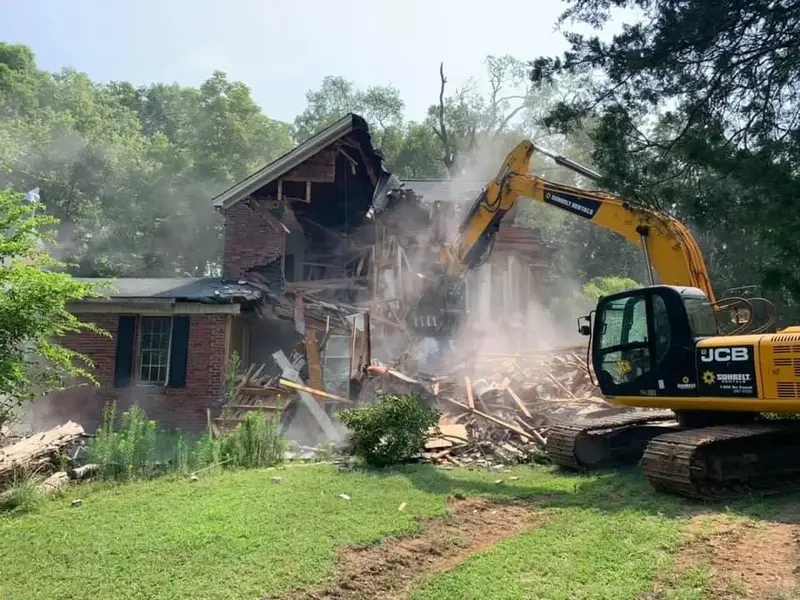


A data look at home demolition, teardowns, and residential rebuilds across Charlotte and Mecklenburg County, NC.
Key Takeaways
- Mecklenburg County does not publish one tidy “homes torn down last year” headline, but permit data tells the story. Roughly 400 substantial residential demolition permits are issued in the county each year, based on a Charlotte Observer analysis of county records.
- Counting smaller and uninhabitable structures, the UNC Charlotte Urban Institute found more than 1,000 total demolitions in 2019, and about 70% of demolished buildings are homes.
- Charlotte teardowns cluster in a few close-in neighborhoods. Sedgefield, Myers Park, South End, and the North Tryon corridor see the densest demolition activity.
- New homes built on teardown lots are bigger. Replacement houses average about 2,650 heated square feet, roughly 17% larger than the typical Mecklenburg home.
- Our own analysis of open data puts the pace at about one older home cleared every day, weekends included, and near $83 million a year in new construction value on former teardown lots.
Charlotte Is Growing, and Old Homes Are Coming Down
Drive through Dilworth, Plaza Midwood, or NoDa and you will see it. A 1940s cottage sits next to a fresh foundation. A construction dumpster fills a front yard. A bungalow that stood for 80 years becomes a graded lot in a week. This is the Charlotte teardown trend, and it is reshaping the city’s oldest neighborhoods one parcel at a time.
At Bright LLC we run residential demolition and land clearing across Charlotte and Mecklenburg County, so we watch this shift up close. People keep asking us the same question: how many old homes actually disappear here each year? Below we pull together the public numbers, add a few calculations of our own, and explain what it means for homeowners across our service area.
Every teardown is a small trade. The city gains a new home and loses a piece of its past on the very same lot.
How Many Old Homes Were Demolished in Mecklenburg County Last Year?
Here is the honest answer. Mecklenburg County issues hundreds of demolition permits a year, but it does not release a single clean count of “homes torn down” for the public. The best figures come from two trusted sources that have studied the county’s open permit data.
First, an analysis by The Charlotte Observer of county permit records found that more than 3,500 residential demolition permits were issued from 2015 through early 2023. That works out to about 400 residential teardowns a year. The reporters removed duplicate permits, tiny structures under 800 square feet, and projects costing less than $5,000, so this number reflects real home demolitions, not sheds.
Second, the UNC Charlotte Urban Institute mapped every recorded demolition in the county. It found that more than 1,000 structures came down in 2019 and that about 70% of all demolished buildings are homes. Counting smaller and unfit-for-habitation houses that the Observer filtered out, the true number of homes lost in a busy year sits closer to 700.
So the realistic range is about 400 substantial home teardowns a year, and up to 700 homes of every kind.
You can track the current pace yourself. Mecklenburg County Code Enforcement publishes a Building Permits Issued Daily tool and monthly statistical reports, and its demolition permitting page explains the process. These tools migrated to the county’s Accela portal in 2025, so the live counts now live there.
Charlotte Home Demolition by the Numbers
| Metric | Figure | Source |
|---|---|---|
| Residential demolition permits, 2015 to early 2023 | 3,500+ | Charlotte Observer |
| Average residential teardowns per year | ~400 | Charlotte Observer |
| Total structures demolished in 2019 | 1,000+ | UNC Charlotte Urban Institute |
| Share of demolished buildings that are homes | ~70% | UNC Charlotte Urban Institute |
| Average size of a new replacement home | 2,650 sq ft | UNC Charlotte Urban Institute |
| Average building cost of a teardown rebuild (2020) | $207,000 | UNC Charlotte Urban Institute |
| Average Mecklenburg home size, 2011 vs 2022 | 2,071 to 2,256 sq ft | Quality of Life Explorer |
Table 1. Key home demolition and teardown figures for Mecklenburg County, NC.
Where the Teardowns Happen: Charlotte’s Demolition Hotspots
Demolition is not spread evenly across the county. The volume of demolition permits climbs the closer you get to Uptown. The Observer’s analysis mapped permits per square mile and found clear hotspots in the wealthy “wedge” south of the city and in fast-changing neighborhoods to the west.
Sedgefield recorded the densest demolition activity of any neighborhood, more than 200 permits per square mile. South End and Myers Park each topped 100 per square mile. The North Tryon corridor, including Optimist Park, Villa Heights, Belmont, and Plaza Shamrock, ran between 70 and 147. West of Uptown, Wesley Heights and Enderly Park along Tuckaseegee Road passed 35 per square mile.
Graph 1. Approximate demolition permits per square mile by neighborhood, 2015 to early 2023. Source: Charlotte Observer analysis of Mecklenburg County data.
These patterns carry weight. Many of the homes coming down sit in historically Black neighborhoods like Biddleville, Grier Heights, and Cherry, where land values are rising fast. Housing experts call this gentrification, and it raises real questions about displacement and affordability.
Kendra Jason, a sociologist at UNC Charlotte, told The Charlotte Observer that longtime residents feel the change deeply.
They understand it’s a great loss to them personally.
Kendra Jason, sociologist, UNC Charlotte
Charis Blackmon, who leads the West Side Community Land Trust, put the cultural cost plainly.
It’s hard to see where we come from.
Charis Blackmon, West Side Community Land Trust
Teardown Hotspot Neighborhoods in Charlotte
| Neighborhood | Demolition intensity | What is driving it |
|---|---|---|
| Sedgefield | 200+ per sq mi | Highest land values south of Uptown |
| Plaza Shamrock / North Tryon | up to 147 per sq mi | Infill near light rail and Uptown |
| Myers Park | 100+ per sq mi | Premium lots, larger custom rebuilds |
| South End | 100+ per sq mi | High-density apartments and townhomes |
| Wesley Heights | 35+ per sq mi | Rapidly changing west-side market |
| Enderly Park | 35+ per sq mi | Rising land values along Tuckaseegee Rd |
Table 2. Charlotte demolition hotspots, ranked by approximate permits per square mile.
Bigger Houses on the Same Lots: The Teardown-and-Rebuild Trend
A teardown is rarely the end of the story. The Urban Institute matched about a third of recorded demolitions to a new construction permit at the same address. Of those rebuilds, 65% became single-family homes, 32% became townhomes or duplexes, and only 3% turned commercial. In short, most Charlotte teardowns become new housing.
The replacements are larger. New homes on these lots average about 2,650 heated square feet. Meanwhile the typical Mecklenburg home grew from 2,071 square feet in 2011 to 2,256 square feet in 2022, a gain of roughly 9%, according to the Charlotte/Mecklenburg Quality of Life Explorer.
The mix of new housing is also shifting. The Charlotte Ledger reported that in 2023, townhome permits passed single-family permits in Mecklenburg for the first time. That trend shows up on teardown lots, where one old house often makes way for several attached units.
Graph 2. New private housing units authorized by building permits, Mecklenburg County. Source: U.S. Census Bureau via FRED.
For context on overall demand, the county authorized 11,969 new private housing units in 2024, per the U.S. Census Bureau. Teardown rebuilds are a small slice of that total, but they are concentrated where land is scarcest.
Bright LLC’s Original Analysis: Unique Numbers From Open Data
The published reports stop at raw counts. We wanted to know what those counts feel like on the ground, so our team ran a few simple calculations from the same open sources. We used about 400 residential teardowns a year as the baseline. Treat these as careful estimates, not official tallies.
- One home a day. 400 teardowns spread across 365 days is about 1.1 homes per day, or roughly 7.7 per week. An older home leaves the Charlotte map almost every single day.
- Around 4,000 homes a decade. At 400 a year, the county loses close to 4,000 older homes every ten years. That matches the 3,500-plus permits the Observer logged over about eight years.
- A 3% sliver, but concentrated. 400 teardowns against 11,969 new housing units permitted in 2024 is about 3.3%. So roughly 97% of new homes rise on vacant or greenfield land, while teardowns hit a few prized neighborhoods hardest.
- Near $83 million a year. 400 rebuilds at the cited $207,000 average building cost is about $82.8 million a year in new construction value on former teardown lots. Because that cost figure is from 2020, today’s real total runs higher.
- The size jump. A 2,650 square foot replacement is about 17% larger than today’s average county home and 28% larger than the 2011 average. Replace a 1,000 square foot cottage and the footprint grows by 165%.
By our math, Charlotte clears about one older home every day and rebuilds bigger almost every time.
Bright LLC analysis of open county and Census data
Our Estimates at a Glance
| What we calculated | Estimate | How we got it |
|---|---|---|
| Older homes cleared per day | ~1.1 | 400 teardowns / 365 days |
| Older homes cleared per week | ~7.7 | 400 teardowns / 52 weeks |
| Homes lost per decade | ~4,000 | 400 per year x 10 years |
| Teardowns as a share of new housing | ~3.3% | 400 / 11,969 permits (2024) |
| New construction value on teardown lots | ~$82.8M/yr | 400 x $207,000 (2020 cost) |
| Rebuild size vs current county average | +17% | 2,650 vs 2,256 sq ft |
| Rebuild size vs a 1,000 sq ft cottage | +165% | 2,650 vs 1,000 sq ft |
Table 3. Bright LLC estimates derived from Charlotte Observer, UNC Charlotte Urban Institute, and U.S. Census open data.
What This Means for Homeowners in the Bright LLC Service Area
If you own an aging home on a valuable lot, you are part of this story. Many of our clients buy an older property in a close-in neighborhood, then choose a clean teardown and rebuild over a costly, uncertain renovation. The economics often favor a fresh start when land values are high and the existing house needs major work.
We handle the full path from permit to pad. That includes house demolition, land clearing and site preparation, and debris removal and haul-off. Our crews coordinate utility locating through NC811 before any digging starts, and we leave the lot graded and ready for your builder. You can see finished projects on our project gallery and read more guides on our blog.
Bright LLC serves Charlotte, Concord, Gastonia, Waxhaw, Fort Mill, and Rock Hill with full-service demolition, land clearing, excavation, debris removal, material delivery, and site preparation. The team also serves additional North and South Carolina areas for house demolition, building demolition, and basement digging projects.
A teardown is not just demolition. It is the first clean step toward the home you actually want.
Conclusion
Charlotte’s teardown wave is real, measurable, and concentrated. The county loses roughly 400 older homes a year to substantial demolition, and likely more once smaller structures are counted. Most of those lots gain a larger home or a cluster of townhomes. The pace adds up to about one home a day and near $83 million a year in new building value.
Growth and preservation will keep pulling against each other in neighborhoods like Sedgefield, Myers Park, and Wesley Heights. As Dan Morrill, the longtime chair of the Charlotte-Mecklenburg Historic Landmarks Commission, once put it, real estate logic usually wins.
Ultimately, all of these historic places, they’re just real estate. Dan Morrill, former chair, Charlotte-Mecklenburg Historic Landmarks Commission
If a teardown is in your future, plan it well and work with a licensed local crew. Contact Bright LLC for a free quote, or learn more about our team and values before you break ground.
Frequently Asked Questions (FAQ)
How many old homes are demolished in Mecklenburg County each year?
About 400 substantial residential teardowns a year, based on a Charlotte Observer analysis of county permit data from 2015 to early 2023. Counting smaller and uninhabitable structures, the UNC Charlotte Urban Institute found more than 1,000 total demolitions in a single year, about 70% of them homes.
Which Charlotte neighborhoods have the most teardowns?
Sedgefield leads at more than 200 demolition permits per square mile. Myers Park and South End each top 100. The North Tryon corridor and west-side neighborhoods like Wesley Heights and Enderly Park also see heavy activity.
Do I need a permit to demolish a house in Charlotte?
Yes. Mecklenburg County requires a demolition permit before any teardown, along with an asbestos and NESHAP notification. You apply through Mecklenburg County Code Enforcement. See the county’s demolition permitting page for the current steps. Bright LLC can manage this process for you.
How long does a residential demolition take?
Most single-family teardowns take only a few days. On one recent Charlotte project, our two-person crew demolished a 2,000 square foot brick house with a half basement, removed the driveway, cleared the yard, and graded the lot in about four days.
What happens to the debris after a teardown?
Licensed crews haul it off and recycle what they can, following county construction and demolition recycling rules. Our debris removal service includes full haul-off and a clean, build-ready lot.
Is it better to renovate or tear down and rebuild?
It depends on the home’s condition, the lot value, and your goals. In close-in Charlotte neighborhoods with high land values and aging houses, a teardown and rebuild often makes more sense. In newer outer-ring neighborhoods, renovation is usually the smarter path. This is general information, not financial advice.
Does Bright LLC work outside the city of Charlotte?
Yes. Bright LLC serves Charlotte, Concord, Gastonia, Waxhaw, Fort Mill, and Rock Hill with full-service demolition, land clearing, excavation, debris removal, material delivery, and site preparation. The team also serves additional North and South Carolina areas for house demolition, building demolition, and basement digging projects. Reach out here for a free estimate.
Sources and Further Reading
- UNC Charlotte Urban Institute, Mapping Charlotte’s Lost Buildings
- The Charlotte Observer, Home Demolitions in Fast-Changing Charlotte Neighborhoods
- Mecklenburg County Code Enforcement, Demolition Permits
- Mecklenburg County Code Enforcement, Statistical Data
- U.S. Census Bureau via FRED, New Private Housing Permits, Mecklenburg County
- Charlotte/Mecklenburg Quality of Life Explorer
- The Charlotte Ledger, New Townhomes Eclipse Single-Family Homes
Ready to clear your lot? Bright LLC handles demolition, land clearing, and debris removal across Charlotte and Mecklenburg County. Get your free quote today.