
Asbestos removal before demolition: costs, risks, legal requirements
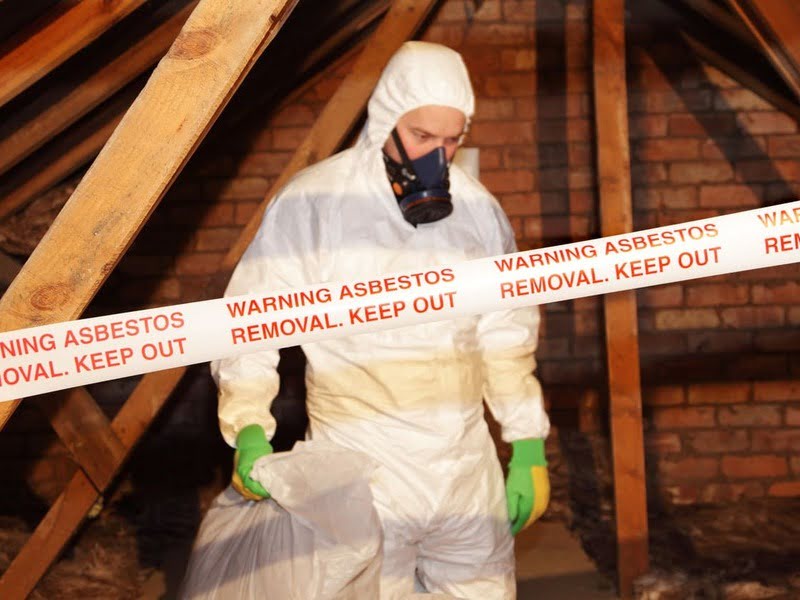
Most homeowners planning a teardown focus on the big picture: permits, equipment, timelines, and what comes next. Asbestos gets treated as a detail to sort out later. That’s a mistake. In North and South Carolina, asbestos inspection and removal is a legal prerequisite to demolition, not an afterthought. Skipping it exposes you to serious health risks, regulatory fines, and project shutdowns that cost far more than the abatement itself.
This guide covers what asbestos is, where it hides in older homes, what the law requires in the Carolinas, what removal actually costs, and how to move through the process without unnecessary delays.
Why asbestos matters in demolition and why older homes are high-risk
Asbestos is a naturally occurring mineral fiber that was widely used in building materials throughout most of the 20th century because of its fire resistance and durability. The problem is that when asbestos-containing materials are disturbed — cut, broken, or demolished — they release microscopic fibers into the air. Inhaled over time, those fibers cause mesothelioma, asbestosis, and lung cancer. There is no safe level of exposure.
Any building constructed before 1980 should be treated as potentially containing asbestos until a licensed inspector proves otherwise. In practice, many homes built through the late 1980s also contain asbestos materials, as existing stocks were used up even after manufacturing restrictions took effect. The Carolinas have a substantial inventory of homes from this era — mill-town neighborhoods in Charlotte and Rock Hill, older residential areas in Columbia and Summerville, and rural properties across both states all represent significant asbestos risk zones.
Where asbestos hides in residential structures
The challenge with asbestos is that it’s not visible and can be present in materials that look perfectly ordinary. Common locations in residential structures include:
- Insulation — pipe insulation, duct wrap, and attic insulation from before 1980 frequently contain asbestos. Spray-applied insulation on ceilings and beams is particularly common in homes from the 1960s and 70s.
- Floor tiles and adhesive — 9×9 inch vinyl floor tiles are almost a signature of mid-century construction and are among the most common asbestos-containing materials found in Carolina homes. The black mastic adhesive beneath the tiles often contains asbestos even when the tiles themselves don’t.
- Roofing and siding materials — asbestos-cement shingles were used extensively in roofing and siding through the 1970s. They’re durable and frequently still intact on older homes throughout both states.
- Drywall joint compound — patching and joint compound used in homes built and renovated through the early 1980s often contained asbestos. In homes that were updated multiple times across decades, compound from different eras may be layered throughout the walls.
- Popcorn ceilings and textured coatings — one of the most common asbestos sources in residential settings. Any textured ceiling applied before 1980 warrants testing.
- HVAC duct insulation and tape — the grey fibrous tape used to seal older duct systems frequently contains asbestos. So does the insulation blanket wrapping the ducts in older homes.
Understanding what to look for is part of why a licensed inspector — not a general contractor or DIY assessment — is required. For a broader look at what happens during a demolition project from start to finish, Bright LLC’s guide on what to expect during a residential demolition project walks through every phase including hazardous material handling.
Legal requirements for asbestos removal in North Carolina
North Carolina has some of the most clearly defined asbestos requirements for demolition in the Southeast. Under the NC Health Hazards Control Unit (HHCU) Asbestos Program, the following apply to any residential demolition:
- Mandatory inspection. Before any demolition begins — full teardown or partial — a licensed asbestos inspector must survey the structure. This is not optional and cannot be waived regardless of the building’s age or apparent condition.
- 10-day notification. Even if the inspection finds no asbestos-containing materials, the property owner or contractor must submit a written notification to the NC HHCU at least 10 working days before demolition begins. This requirement exists for all regulated structures. Missing this window halts your project.
- Licensed abatement contractors. If asbestos is found, removal must be performed by a licensed asbestos abatement contractor — not a general demolition crew, regardless of their experience. NC law requires specific licensing, worker certification, and air monitoring during abatement.
- Waste disposal. Asbestos-containing material must be transported and disposed of at approved facilities in sealed, labeled containers. Mixing it with general demolition debris is a federal violation under EPA NESHAP regulations.
Failure to comply carries significant consequences — fines up to $25,000 per day, project injunctions, and personal liability for property owners. These aren’t theoretical risks. Regulators in Mecklenburg, Wake, and Durham counties actively enforce asbestos requirements, particularly on residential demolition projects.
For a full picture of the permitting landscape in Charlotte specifically, see Bright LLC’s breakdown of demolition permits in Charlotte, NC.
Legal requirements in South Carolina for asbestos removal
South Carolina follows federal EPA NESHAP standards for asbestos in demolition, administered through the SC Department of Health and Environmental Control (DHEC). Requirements parallel North Carolina’s in most respects:
- Pre-demolition inspection by a licensed inspector is required for all structures that could reasonably contain asbestos.
- Notification to SC DHEC must be filed at least 10 working days before demolition. The notification requires inspector findings, a description of the abatement plan if needed, and contractor credentials.
- Licensed abatement of any identified materials is mandatory before mechanical demolition equipment begins work.
In Rock Hill and York County, Columbia and Richland County, and Summerville and Dorchester County, local permitting offices also require proof of asbestos clearance as part of the demolition permit application. That means abatement documentation isn’t just a regulatory formality — it’s a practical requirement to get your permit in hand. Bright LLC coordinates this process for projects in Rock Hill, Columbia, Summerville, and surrounding areas.
How much does asbestos removal actually cost?
The cost of asbestos abatement before demolition in the Carolinas varies based on how much material is present, where it’s located, and how it needs to be removed. Here’s a realistic breakdown:
- Inspection: $300 to $800 for a standard residential inspection, including lab analysis of samples. In larger or more complex structures, this can reach $1,500. Budget 1–2 weeks for the process — inspector availability and lab turnaround both affect timing.
- Abatement — minor scope: isolated materials like floor tiles in one room, a section of pipe insulation, or a small area of textured ceiling run $1,500 to $5,000. These projects can often be completed in one to three days.
- Abatement — moderate scope: multiple material types across a full home — floor tiles throughout, duct insulation, popcorn ceilings, and joint compound — typically costs $5,000 to $12,000 and takes three to seven days.
- Abatement — extensive scope: heavily contaminated structures, homes with spray-applied insulation, or properties with multiple types of asbestos-containing materials throughout can run $12,000 to $30,000 or more. These are less common in standard residential demolition but occur in older commercial properties and heavily renovated homes.
- Air clearance testing: after abatement is complete, a licensed air monitor must certify the area is safe before demolition proceeds. This adds $200 to $600 but is legally required and should be budgeted as a standard line item.
As noted in Bright LLC’s full demolition cost breakdown, budgeting an additional 10–20% buffer above your base demolition quote is standard practice — and asbestos discovery is one of the most common reasons that buffer gets used.
How asbestos abatement fits into the overall demolition timeline
The typical sequence for a residential demolition in the Carolinas runs like this: inspection, then HHCU or DHEC notification filing, then abatement (if needed), then air clearance, then utility disconnection, then permitting, then mechanical demolition.
The biggest mistake homeowners make is starting the permitting or utility disconnection process without first confirming the asbestos inspection timeline. Labs and abatement crews get busy from late spring through summer — scheduling inspections at least four to six weeks before your planned demolition date keeps the project on track. For everything that needs to happen before equipment arrives on site, Bright LLC’s guide on safely disconnecting utilities before demolition covers the full preparation sequence.
What to ask your contractor about asbestos handling
Not all demolition contractors handle asbestos coordination directly — some expect homeowners to arrange inspection and abatement independently. Before signing any demolition contract in NC or SC, confirm:
Who is responsible for the HHCU or DHEC notification filing? Does the quote include asbestos inspection, or is that a separate cost? If asbestos is found, does the contractor have a licensed abatement partner, or will you need to find one separately? Will abatement findings be documented for your permit application?
A contractor who handles this coordination end-to-end saves significant time and removes the risk of missed filings or sequencing errors that can stall a project by weeks.
Working with Bright LLC on asbestos and demolition
Bright LLC is a licensed demolition contractor serving Charlotte, Rock Hill, Columbia, Summerville, and communities throughout North and South Carolina. The team coordinates asbestos inspection scheduling, manages state notification requirements, and works directly with licensed abatement contractors so homeowners don’t have to manage multiple vendors and regulatory deadlines independently.
Transparent, itemized quotes mean you know exactly what the asbestos process adds to your project before work begins — with no hidden fees and no surprises after the fact.
Get a free demolition estimate from Bright LLC — including a clear picture of asbestos requirements for your specific property and location.