
Flood zone risk and demolition demand: are Charlotte homeowners tearing down in the wrong areas?

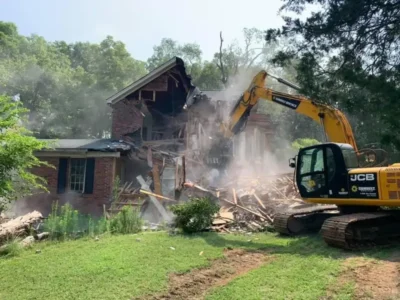
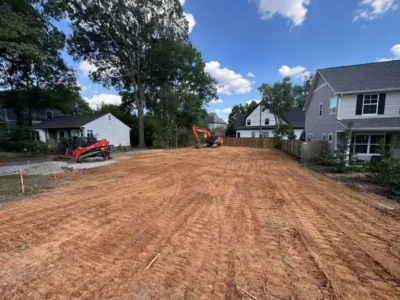
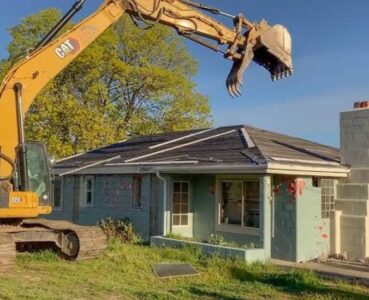
We map Charlotte’s teardown demand against its flood zones, and explain when a demolition lowers risk and when it raises it.
Key takeaways
- Charlotte floods mainly along urban creeks like Little Sugar Creek, Briar Creek, and McAlpine Creek, and several teardown hotspots sit near these corridors.
- Not all teardowns are equal. The county’s buyout program demolishes flood-prone homes to lower risk. A private rebuild on the same low lot can raise it.
- Charlotte regulates two floodplains. The Community (future) floodplain adds about 4.18 square miles beyond the FEMA map, and new homes must sit above a Flood Protection Elevation.
- Since 1999, Storm Water Services has bought and removed 450+ flood-prone properties and relocated 700+ households and businesses.
- Our verdict: most teardowns are not in the wrong areas, as long as owners check the flood maps and build higher. The wrong move is ignoring the floodplain.
Why flood risk belongs in the teardown conversation
Charlotte’s teardown wave keeps growing. As we covered in our look at Charlotte teardowns, roughly 400 older homes come down each year, often in close-in neighborhoods. Many of those neighborhoods grew up along creeks. That raises a fair question. When buyers clear an old house and build a bigger one, are they pouring money into a flood zone?
The honest answer is: sometimes. Charlotte floods fast. Heavy rain overwhelms urban creeks like Little Sugar Creek and Briar Creek, and water can rise in minutes. Just one inch of water in a home causes about $27,000 in damage. So the location of a teardown matters as much as the build.
At Bright LLC we clear lots across the city, so we see both sides. We handle demolition and site prep for owners preparing flood-aware rebuilds, and we have watched the county remove homes from harm’s way. Below we lay out the data and a simple verdict.
Tearing down a flood-prone home can reduce risk. Rebuilding bigger on the same low lot can increase it.
Charlotte’s flood risk by the numbers
Here are the figures that frame the issue. They come from FEMA, Charlotte-Mecklenburg Storm Water Services, and local floodplain records.
| Flood fact | Figure | Source |
|---|---|---|
| Original FEMA flood map (FIRM) date for Charlotte | Aug 15, 1978 | City of Charlotte |
| Extra land in the Community (future) floodplain | ~4.18 sq mi | Charlotte-Mecklenburg |
| New-build elevation rule in the floodplain | Community BFE + 1 ft | County floodplain ordinance |
| Flood-prone properties bought and removed since 1999 | 450+ | Storm Water Services |
| Households and businesses relocated | 700+ | Storm Water Services / ULI |
| Land returned to greenspace | 185 acres | NC Resilience Exchange |
| Local buyout program funding | ~$4 million / year | Storm Water Services |
| NFIP flood-insurance claims in Mecklenburg since 1978 | ~2,900 (~$60M) | FEMA NFIP |
| Damage from one inch of water in a home | ~$27,000 | FEMA / industry |
| Federal flood disaster declarations, Mecklenburg | 7 | FEMA |
Table 1. Charlotte and Mecklenburg County flood risk and floodplain facts.
The two kinds of teardown in a flood zone
When people ask if Charlotte is tearing down in the wrong areas, they often miss a key point. There are two very different kinds of teardown, and they push flood risk in opposite directions.
Graph 1. Estimated annual demolitions by driver. Market-driven teardowns far outnumber flood buyouts.
Most teardowns are market-driven. Owners clear an old home to build a larger one on a valuable lot. A smaller stream of teardowns is flood-driven. The county buys a chronically flooded home, demolishes it, and keeps the land open. The table below shows how each path changes risk.
| Type of teardown | What happens | Effect on flood risk |
|---|---|---|
| Floodplain buyout demolition | County buys a flood-prone home, removes it, and keeps the land as open space | Lowers risk |
| Private teardown, rebuild low | Owner clears an old home and rebuilds near the same ground level | Can raise risk |
| Private teardown, rebuild elevated | Owner clears and rebuilds above the Flood Protection Elevation | Lowers risk vs the old home |
Table 2. The same act, demolition, can cut or add to flood risk depending on what comes next.
How Charlotte regulates building in the floodplain
Charlotte does not leave this to chance. In 2000, Charlotte-Mecklenburg became the first community in the nation to map both current and future floodplains. The Community floodplain shows where water is likely to reach once upstream land is fully developed. It extends the FEMA 100-year floodplain by about 4.18 square miles, which is roughly 2,675 acres of extra regulated land.
Local rules apply to both maps. New homes and major rebuilds in the regulated floodplain must sit above a Flood Protection Elevation, set at the Community base flood elevation plus one foot of freeboard. You can read the current rules in the City of Charlotte floodplain regulations and check any address on the Storm Water Services flood maps or the FEMA Flood Map Service Center.
In Charlotte, the smart question is not only whether to tear down. It is whether to build back higher.
The overlap: teardown hotspots near Charlotte’s creeks
Here is where demand and risk meet. Many teardown hotspots grew up beside creeks before the floodplains were mapped. Sedgefield, South End, and Dilworth sit near Little Sugar Creek. Myers Park and Cotswold sit near Briar Creek. When the remnants of Tropical Storm Fay hit, about 90% of the flooding fell in the Briar Creek watershed, and more than 600 structures took on water.
This overlap is real, but it does not mean every teardown is a mistake. Older creek-side homes often sit low, with slab floors and no flood protection. A new home built above the Flood Protection Elevation can be far safer than the house it replaced. The danger is rebuilding low, or skipping the flood maps entirely.
The county’s answer: the floodplain buyout program
Charlotte-Mecklenburg Storm Water Services runs one of the most respected floodplain buyout programs in the country. Since 1999, it has bought and removed more than 450 flood-prone homes, apartments, and businesses, relocated over 700 households and businesses, and returned 185 acres to open space. The city funds it with about $4 million a year in stormwater fees, and FEMA grants cover part of the cost when available.
Graph 2. Floodplain buyout outcomes, 1999 to 2022. Source: Storm Water Services via ULI and NC Resilience Exchange.
The program is voluntary. Owners sell at fair value, the structure comes down, and the lot becomes greenspace that absorbs future floods. Tim Trautman, who manages flood mitigation for Storm Water Services, has described the shift in approach plainly.
It was time to start un-developing. Tim Trautman, flood mitigation program manager, Charlotte-Mecklenburg Storm Water Services
After Hurricane Helene in 2024, the county expanded this idea with a Quick Buy Program for flood-hit homes near the Catawba River, offering fair value plus a premium. Some owners rebuilt. Others sold and moved out of harm’s way.
Bright LLC’s analysis: are we tearing down in the wrong areas?
We ran the open numbers to size the issue. Treat these as careful estimates, not official counts.
- Market beats flood, 20 to 1. Private teardowns run near 400 a year. Buyout demolitions run near 20 a year, since the county removed 450-plus homes over 23 years. For every flood-driven demolition, Charlotte sees about twenty market-driven ones.
- Most teardowns are not flood-driven. The vast majority of demolitions chase land value, not flood risk. So the flood-zone overlap touches a minority of projects, mostly the creek-side hotspots.
- A hidden extra zone. The Community floodplain adds about 2,675 acres of regulated land beyond the FEMA map. Many buyers never check it, yet the building rules still apply there.
- The cost of getting it wrong. At about $27,000 of damage per inch of water, a single creek-side flood across a few hundred homes can run into the tens of millions.
- The cost of getting it right is small. Demolition is a minor line on a rebuild budget, and elevating a new home above the Flood Protection Elevation is far cheaper than repeated flood losses.
For every flood-driven buyout demolition, Charlotte sees about twenty market-driven teardowns. Bright LLC analysis of open county data
Our verdict: most Charlotte homeowners are not tearing down in the wrong areas, as long as they respect the maps. Tearing down a low, flood-prone home is often the right first step. The wrong move is rebuilding bigger on the same low lot without elevating, or pouring money into a chronically flooded parcel the county may one day target for buyout.
A smart-teardown checklist for flood-prone lots
If your lot sits near a creek or inside the regulated floodplain, a few steps protect your investment.
| Step | Why it matters |
|---|---|
| Check the flood maps first | Confirms FEMA and Community floodplain status before you buy or build |
| Pull a floodplain development permit | Required for any work in the regulated floodplain |
| Build above the Flood Protection Elevation | The county rule is Community BFE plus one foot, and higher is safer |
| Use flood-resistant materials below that line | Limits damage if water returns |
| Ask about buyout eligibility | A chronically flooded lot may qualify for a county buyout |
| Clear and grade the site properly | Good drainage and a clean demolition protect the new build |
Table 3. Steps that turn a risky teardown into a smart one.
This article is general information, not legal, insurance, or financial advice. Confirm flood status and rules with Storm Water Services and a licensed professional before you commit.
Conclusion
Charlotte’s teardown demand and its flood zones do overlap, mostly in creek-side neighborhoods like Sedgefield, South End, and Myers Park. But demolition itself is not the problem. The county removes flood-prone homes to cut risk, and a well-elevated new home can be far safer than the old one. The risk lives in rebuilding low and skipping the maps.
Demolition does not create flood risk. Where you rebuild, and how high, decides that.
If you are planning a teardown near a Charlotte creek, start with the flood maps and a clean, well-graded lot. Contact Bright LLC for a free demolition and site-prep quote, see our finished work on the project gallery, or read more on our blog.
Frequently asked questions (FAQ)
Is my Charlotte home in a flood zone?
Check the Storm Water Services flood maps or the FEMA Flood Map Service Center. Charlotte also maps a Community floodplain that shows future flood risk beyond the FEMA map.
Can I tear down and rebuild a house in a Charlotte flood zone?
Usually yes, but the rebuild must follow floodplain rules. New homes must sit above the Flood Protection Elevation, and you need a floodplain development permit along with a standard demolition permit.
What is the difference between the FEMA floodplain and the Community floodplain?
The FEMA floodplain reflects current conditions and drives flood-insurance requirements. The Community floodplain shows where flooding is likely at future build-out. It adds about 4.18 square miles, and Charlotte’s building rules apply to both.
Does tearing down a flood-prone home reduce risk?
It can. When the county buys and removes a chronically flooded home and keeps the land open, risk drops. When an owner rebuilds higher and to code, the new home is usually safer than the old one. Rebuilding low is the case that adds risk.
What is the Charlotte-Mecklenburg floodplain buyout program?
It is a voluntary program from Storm Water Services that buys flood-prone properties at fair value, demolishes them, and turns the land into greenspace. Since 1999 it has removed 450-plus properties and relocated 700-plus households and businesses.
How high do I have to build in a Charlotte floodplain?
New construction and major rebuilds must sit at or above the Flood Protection Elevation, which is the Community base flood elevation plus one foot of freeboard. Building higher adds protection and can lower insurance costs.
Does Bright LLC demolish homes in flood-prone areas?
Yes. We handle house demolition, debris removal, land clearing, and grading across Charlotte, including creek-side lots, and we leave a clean, build-ready site. Reach out for a free quote.
Sources and further reading
- Charlotte-Mecklenburg Storm Water Services, flood maps and risk tools
- FEMA Flood Map Service Center
- NC Resilience Exchange, Charlotte-Mecklenburg Floodplain Buyouts
- Urban Land Institute, Charlotte-Mecklenburg Floodplain Buyout Program
- City of Charlotte, Floodplain Regulations (UDO Article 27)
- Mecklenburg County Code Enforcement, Demolition Permits
Tearing down near a Charlotte creek? Bright LLC delivers safe, clean demolition and a build-ready lot. Get your free quote today.