
How to clear land while protecting trees and natural drainage in Charlotte

Clearing land in Charlotte is not just about removing trees and brush. On many lots, the bigger challenge is preparing the site without damaging mature trees, compacting clay soil, or sending stormwater toward the wrong place. A careful clearing plan protects what should stay, removes what blocks construction, and keeps drainage working before grading or building begins.
This guide explains how to clear land while protecting trees, natural drainage, and soil stability on Charlotte-area projects.
Why traditional land clearing can be harmful
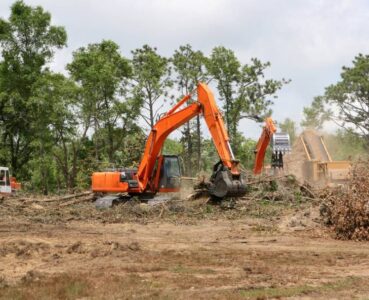
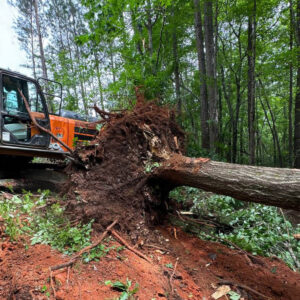
Bulldozers don’t distinguish between brush and healthy trees. When every root system is removed, drainage and grading services are thrown off balance. Exposed clay washes downhill, and runoff cuts through properties that were previously stable. Most Charlotte erosion fines happen because clearing crews skip erosion control and drainage design and ignore the site’s natural patterns. Sun hits bare lots harder — soils dry out, utility trenches collapse, summer cooling costs rise. Trees aren’t the only loss. Shade, privacy, resale value — all of it goes with the canopy.
Overclearing also means most of the real problems show up after the equipment leaves: water pooling near new foundations, silt clogging street drains, replanting that doesn’t take root. There’s no way to reverse those results or “fix” a stripped site in one season. That’s why we always recommend looking at land clearing risks Charlotte builders face before making any decision.
Principles of eco-friendly land clearing
Conventional clearing wipes out more than just brush. In Charlotte, a smarter approach is required — one that uses eco-friendly land clearing to save valuable trees and control where water goes. Every plan starts with the same priorities: protect what’s worth keeping, minimize disturbance, and create a site that won’t fail after the project is done.
Selective clearing: keeping what matters
Aggressive clearing removes every root and shade tree, but that’s not what most lots need. Selective clearing means marking out legacy oaks, healthy pines and the native understory that prevents runoff. Before any work starts, these assets are flagged and mapped to avoid accidental damage. This way, tree preservation during construction happens as part of the process, not as an afterthought.
The benefits are immediate: cooler sites, stable soil, fewer failed plantings and less trouble with Charlotte’s tree codes. Selective clearing protects privacy, keeps properties attractive, and avoids fines for unnecessary removal. Every clearing job should begin by deciding what deserves to remain.
Planning for natural drainage and soil health
Poor drainage creates headaches that never go away. Local clay holds water after every rain and if flow patterns are ignored, runoff floods basements and damages new work. Effective drainage planning starts with a careful review of existing flow lines and low points. The best sustainable land clearing methods are always planned with erosion control and drainage design in mind — protecting topsoil, channeling water away from buildings and stopping new ruts before they form.
Proper grading keeps water from pooling where it shouldn’t. Mulch socks, silt fencing, and on-site checks are used from day one by any team providing eco-friendly land clearing services in Charlotte. A site with strong drainage today avoids expensive repairs tomorrow.
Because drainage planning often depends on both clearing and grading, see our guide to clearing and grading to understand how the two steps work together before construction starts.
Equipment and techniques for low-impact clearing
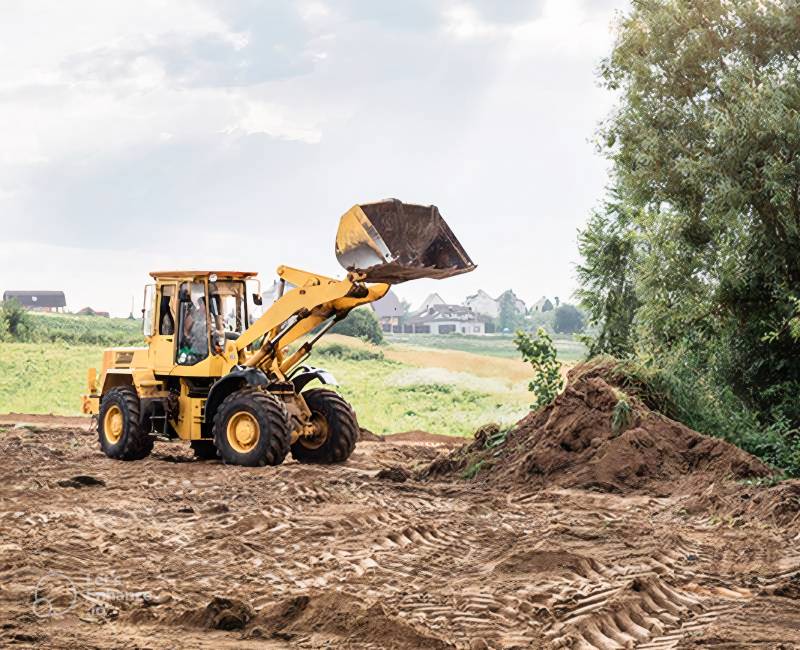
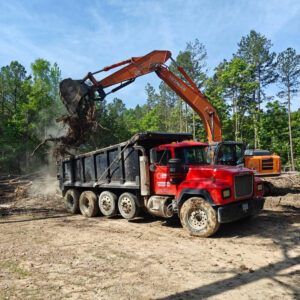
Charlotte’s clay soils compact easily, so the gear on site matters as much as the plan. Low-impact land clearing techniques start with lightweight track loaders that spread their weight and leave root zones intact. Forestry-mulcher heads turn saplings into a mulch layer at ground level, doubling as land clearing with erosion control.
Rubber-track skid steers handle tight corridors where larger machines would crush soil. When utilities cross a protected root zone, crews use air spades to excavate without cutting fibers. If a stump must go, a directional grinder works from the top down, protecting nearby trunks and preventing deep holes that reroute runoff.
Ground mats are set under every machine where the soil is soft. They stop ruts before they form and keep sediment out of creeks after storms. Each pass is logged by GPS so regrading later follows the same controlled paths — a core part of sustainable land clearing methods.
Rules and permits you shouldn’t ignore
Land clearing in Charlotte is regulated through local erosion, sedimentation, stormwater, and tree-protection requirements. Charlotte UDO Article 28 covers soil erosion and sedimentation control, including requirements for land-disturbing activity. For larger or more sensitive projects, the NC DEQ Erosion and Sediment Control Program is also worth checking before work starts.
Getting a permit isn’t paperwork for its own sake: plans must include tree surveys, root protection and clear drainage and grading services details for review. Protected trees, creek buffers and erosion controls are detailed in the Charlotte Land Development Standards Manual (CLDSM). Inspectors check fencing and sediment barriers at every visit. Miss a standard and the project may face stop-work issues, corrective work, delays, and possible fines depending on the local enforcement process.
Failing to plan for land clearing and environmental protection usually means project delays and extra expenses. Crews who flag roots, post silt fencing and file complete permits keep projects moving and pass inspections without last-minute surprises. See how these standards play out in practice in our Charlotte project portfolio, where each job meets every code from start to finish.
How a thoughtful approach saves you problems down the road
Rushed clearing might get a project moving, but the consequences often show up long after crews leave. Thoughtful construction site tree preservation shields valuable shade, supports property values and means fewer calls for replanting or erosion repair next season. Lots that start with tree conservation during excavation see stronger root systems, less soil loss and fewer problems with new plantings.
Careful land development with tree protection also makes inspections faster. Preserved trees and undisturbed root zones keep city inspectors satisfied and help projects clear final approvals with less back-and-forth. Long-term, healthy tree cover keeps homes cooler, supports privacy and lowers irrigation needs.
On most Charlotte lots, eco-friendly stormwater management is the difference between a stable site and flooded driveways. Projects that integrate drainage and grading services from the start avoid foundation damage, water pooling and expensive grading corrections in the future. Every well-planned detail — root fencing, silt barriers and minimal grading — pays off in less stress, lower maintenance costs and a site that stands up to both weather and inspections.
Bright LLC can clear your land without hurting what matters
Every site has assets worth protecting. Our team uses eco-friendly land clearing services that focus on tree preservation during construction, stable soils and long-term drainage performance. From GIS-based planning to on-site supervision, each step is measured and documented to avoid accidental damage and make inspections predictable.
We integrate land grading and drainage services from day one, aligning equipment, schedules and erosion controls to local requirements. Specialized crews work around protected root zones, set silt barriers before grading and finish with careful stabilization so the lot is ready for both weather and review. When questions come up, you talk directly with the people managing your job — not a call center.
If you want a clearing plan tailored to your site, call +1 704-995-7731 or reach out through our contact page. We’ll meet you on the lot, map the boundaries and explain what can stay, what must go and how to keep value in the ground for years ahead.
Conclusion
Land clearing doesn’t have to mean starting over. A careful approach — built on sustainable land clearing methods, eco-friendly stormwater management and respect for mature trees — prevents hidden costs, failed inspections and long-term site problems. Whether you’re building in Ballantyne or north of Lake Norman, each choice in the clearing process shapes how the site holds up under Carolina storms.
Bright LLC delivers results that keep trees standing, drainage flowing and future repairs to a minimum. With the right methods and an experienced team, it’s possible to clear land for any project without sacrificing what matters most.

Clear the way — call a professional
Need help with demolition, excavation, or land clearing? Don’t wait — our crew is ready 24/7 to take on your project safely and efficiently.
Related Services
Land clearing
Debris removal
Excavation
Get in touch today