
How much does concrete removal cost after demolition in Charlotte?
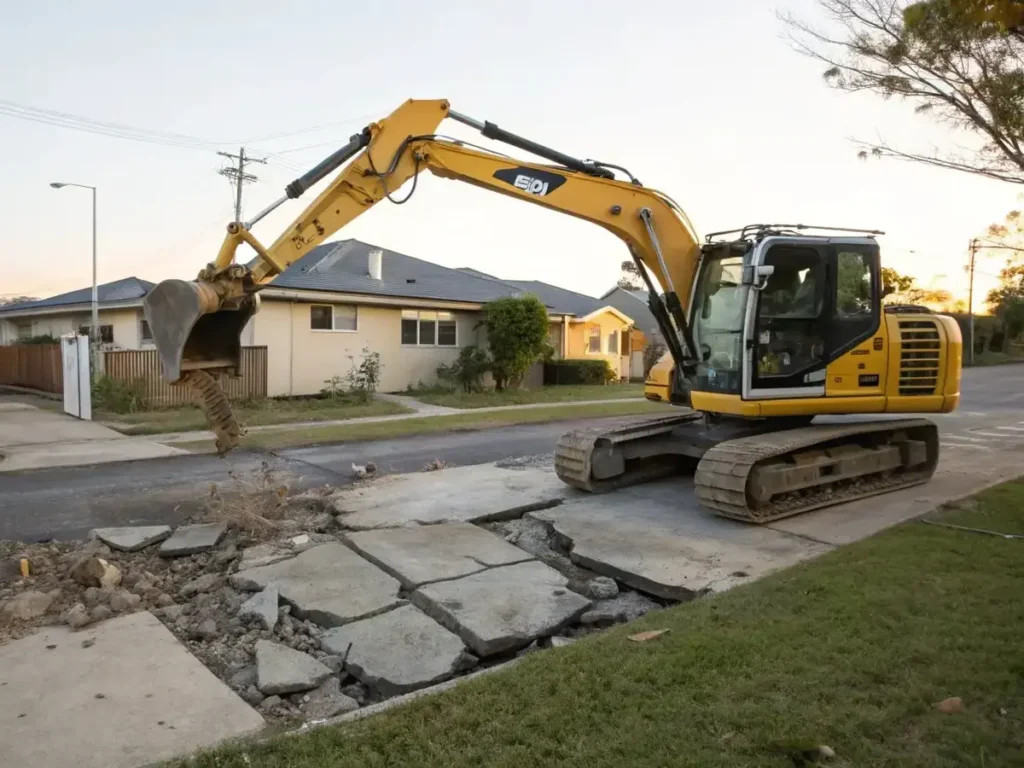
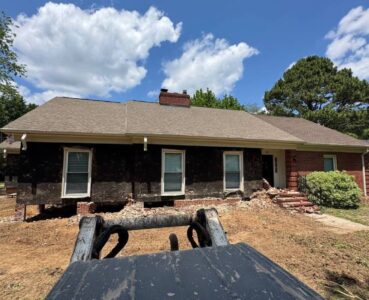
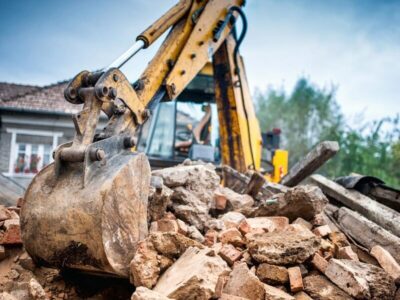
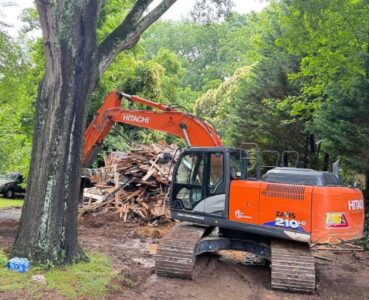
You just tore down a structure. The debris is gone. But there’s still a concrete slab, a driveway, a set of footings, or an old foundation sitting on the lot — and now you need to decide what to do with it.
Concrete removal is one of the most common next steps after a residential demolition in Charlotte and the surrounding counties. It’s also one of the most misunderstood in terms of pricing. This guide breaks down exactly what you’ll pay in the Charlotte metro, what drives costs up or down, and when it makes sense to keep the slab instead of pulling it.
Key takeaways
- Concrete removal in Charlotte costs $2–$6 per square foot for standard slabs, or $4–$8 per square foot for reinforced concrete with rebar
- A typical post-demolition foundation slab (800–1,200 sq ft) runs $2,000–$7,200 to remove in the Charlotte area
- Rebar, access restrictions, and slab thickness are the three biggest cost drivers
- Bundling concrete removal with an active demolition project almost always saves money
- A cleared, graded lot is worth more to buyers and builders than one with a leftover slab
What concrete removal actually involves after a house comes down
Whether concrete remains after demolition depends on the agreed project scope. Bright LLC can include foundation and slab removal, driveway removal, debris haul-off, backfill, compaction, and final grading when those steps are needed. The estimate should state clearly which concrete elements will be removed.
Post-demolition concrete removal usually involves one or more of the following:
- Foundation slab removal — breaking up and hauling the main concrete floor left after a house teardown
- Footing removal — digging out and removing concrete footings that supported exterior walls
- Driveway removal — breaking and hauling the concrete driveway apron and approach
- Porch and step removal — removing attached concrete steps or porch pads
- Garage floor removal — taking out the concrete floor of a demolished detached garage
If you’re still deciding whether to proceed with a full demolition, our guide on what to expect during a residential demolition project walks through the full process from permit to cleanup.
Concrete removal cost in Charlotte: typical price ranges
Charlotte sits in the mid-range of concrete removal pricing nationally. Labor costs in Mecklenburg County and surrounding areas are moderate compared to major metros like Atlanta or Washington D.C., but higher than rural NC markets. Here’s what you should expect to pay for common post-demolition concrete removal jobs in the Charlotte area:
| Concrete type | Size (typical) | Cost range (Charlotte area) | Notes |
| Foundation slab (unreinforced) | 800–1,200 sq ft | $1,600–$4,800 | Standard ranch or bungalow footprint |
| Foundation slab (with rebar) | 800–1,200 sq ft | $3,200–$7,200 | Rebar adds 50–100% to base cost |
| Concrete driveway (single-car) | 250–350 sq ft | $600–$1,800 | Often unreinforced |
| Concrete driveway (two-car) | 400–600 sq ft | $1,200–$3,200 | Post-1990 driveways often have rebar |
| Detached garage floor | 300–500 sq ft | $700–$2,500 | Access usually straightforward |
| Porch slab and steps | 80–150 sq ft | $300–$900 | Watch for footing depth |
| Concrete footings (perimeter) | Linear job | $1,500–$4,500 | Depth and rebar content vary widely |
| Sidewalk or walkway | 100–200 sq ft | $250–$800 | Usually lowest-cost removal |
Current cost guides place standard concrete removal near $2–$6 per square foot. Reinforcement, thickness, access, haul distance, and disposal needs can raise the final price. Treat the ranges below as planning estimates, not fixed quotes. They do not include grading or topsoil work after removal — that’s a separate line item.
❝ Bundling concrete removal with your demolition project is almost always the smartest move. The equipment is already on site, the crew knows the layout, and you avoid a second mobilization charge that can add $500–$1,500 to the total.
What drives concrete removal costs up in the Charlotte area
Rebar and wire mesh
This is the single biggest cost variable. Reinforced concrete — concrete that contains embedded steel rebar or wire mesh — takes significantly longer to break apart and cannot go directly into a standard dumpster or haul truck. The steel has to be cut, separated, and recycled separately. Rebar-reinforced concrete typically adds 50–100% to the base removal cost.
Residential slabs may contain rebar or wire mesh, but age alone does not confirm how the concrete was reinforced. A site inspection or test cut gives the contractor a better basis for pricing.
Slab thickness
Standard residential patios and sidewalks are 3–4 inches thick. Driveways are typically 4–6 inches. Foundations and garage slabs can run 4–8 inches or more. Every extra inch adds breaking time and haul weight — concrete weighs roughly 4,000 pounds per cubic yard. A 6-inch slab has 50% more material than a 4-inch slab of the same square footage.
Site access
In Charlotte’s older close-in neighborhoods — Myers Park, Dilworth, NoDa, Wesley Heights — lots are often narrow and tightly surrounded by mature trees, fences, and adjacent structures. If an excavator or skid steer can’t reach the slab, crews break it by hand with jackhammers and carry debris out in smaller loads. That’s more labor and more time, which means a higher price.
Newer suburban lots in Concord, Gastonia, Huntersville, and Indian Trail tend to have better equipment access, which keeps costs closer to the lower end of the range.
Disposal fees and haul distance
Broken concrete is recyclable. Reputable contractors route concrete debris to recycling facilities rather than landfills, which is both environmentally responsible and usually cheaper than landfill disposal. Recycling fees in the Charlotte area typically run $30–$60 per ton. A standard residential slab removal generates 10–30 tons of debris depending on size and thickness.
Always ask your contractor whether disposal is included in their quote and where the concrete goes. If it’s going to a landfill rather than a recycling facility, that’s a sign worth noting.
Whether it’s bundled with demolition
When concrete removal is part of a larger residential demolition project, the cost per square foot is almost always lower. There’s no separate mobilization charge, the equipment is already on site, and the scheduling is simpler. If you know the slab needs to go, flag it before the demo crew arrives — not after.
Cost factors at a glance
| Factor | Lower cost | Higher cost |
| Reinforcement | No rebar or mesh | Rebar-reinforced concrete |
| Thickness | 3–4 inches | 6 inches or more |
| Site access | Open lot, wide driveway | Tight urban lot, fencing, trees |
| Project timing | Bundled with demolition | Standalone job after demo |
| Disposal | Recycled concrete | Landfill disposal |
| Location | Suburban (Concord, Gastonia) | Dense urban (South End, Myers Park) |
Should you keep the slab or remove it?
Not every post-demolition slab needs to come out. The right answer depends on what you plan to do with the land next.
Keep the slab if…
- You plan to build a new structure in the same footprint and the existing slab is level, in good condition, and properly sized for the new build
- You want to turn the area into a patio, parking pad, or outdoor entertainment space
- The slab passes a structural review from your new builder or engineer
- Removing it would disturb utility lines running beneath it
Remove the slab if…
- You’re selling the lot and want to market it as fully cleared and ready to build
- The slab is cracked, heaved, or settling unevenly due to soil movement
- The new structure will have a different footprint or require a new foundation design
- You want to replant the area as lawn or landscaping
- The slab sits over fill dirt that needs to be regraded
If you’re selling the property, a cleared lot almost always moves faster and brings more interest from builders. We cover that in more detail in our article on how to sell a property faster by demolishing the old structure first.
What happens after the concrete comes out
Once the concrete is gone, the lot usually needs some attention before it’s truly ready for its next use. The removal process leaves behind:
- An uneven subgrade from excavation and debris loading
- Compaction voids where footings were dug out
- Exposed subsoil that may drain poorly or erode in rain
This is where grading and leveling comes in. We grade the site to proper drainage slope, compact the subgrade, and bring in fill dirt or topsoil as needed to get the lot ready for construction or landscaping.
❝ A lot that’s been properly graded after concrete removal photographs better, drains correctly, and is far easier for a builder or developer to assess quickly. It’s a small investment that makes a real difference.
Do you need a permit to remove concrete in Charlotte?
Permit requirements depend on the type and location of the concrete and what work follows. Removing a private patio or slab may follow a different process than altering a driveway apron, working in the public right-of-way, removing a foundation, or changing site drainage.
Concrete removal tied to house demolition, new construction, foundation work, or major grading may require additional review. Confirm the requirements with Mecklenburg County Code Enforcement or the Charlotte Development Center before work begins.
Bright LLC provides demolition permit assistance, but the property owner may also complete the required paperwork.
Concrete removal costs across the Bright LLC service area
Pricing in the broader Charlotte metro varies slightly depending on local labor markets, disposal facility proximity, and typical lot access. Here’s how the Charlotte area compares across the cities we work in:
| City / area | Relative cost vs. Charlotte | Key factor |
| Charlotte (Mecklenburg County) | Baseline | Varies widely by neighborhood density |
| Concord / Cabarrus County | 5–10% lower | More open lots, easier equipment access |
| Gastonia / Gaston County | 5–10% lower | Lower disposal fees, good site access |
| Rock Hill / York County, SC | Roughly equal | SC disposal rules slightly different |
| Huntersville | Roughly equal | Newer construction, often reinforced slabs |
| Indian Trail / Union County | 5–8% lower | Suburban lots, good haul road access |
How to get a fair quote for concrete removal in Charlotte
Concrete removal pricing varies more than most homeowners expect, because so much depends on what’s actually in the slab. Here’s how to set yourself up for an accurate quote:
- Tell the contractor the approximate slab age, but do not rely on age alone to identify reinforcement. Photos, visible slab edges, project records, or a site inspection provide better pricing information.
- Describe the access. Is there a clear path for an excavator or skid steer? Or is the slab surrounded by fencing, trees, or tight passageways?
- Ask what’s included. Make sure the quote covers breaking, loading, haul-off, and disposal. Some quotes stop at the curb.
- Ask where the concrete goes. Recycling facilities are better than landfills for cost and environmental reasons.
- Get the quote in person or via photos. Phone estimates for concrete removal are almost always inaccurate. A crew needs to see the slab to price it properly.
Get a concrete removal quote in Charlotte today
We handle concrete removal as a standalone service and as part of full demolition and site preparation projects across Charlotte, Concord, Gastonia, Rock Hill, Columbia, and throughout the Carolinas.
We inspect the concrete and provide a clear estimate based on its size, thickness, reinforcement, access, haul-off, and disposal needs. If concrete removal is combined with demolition or grading, the work can be included in one project scope.
Call us at (704) 995-7731 or request a free quote online. We’ll get back to you fast.
FAQ: concrete removal after demolition in Charlotte
How much does it cost to remove a concrete foundation after a house is demolished in Charlotte?
A typical residential foundation slab in Charlotte costs $2,000–$7,200 to remove, depending on size, thickness, and whether it contains rebar. Unreinforced slabs on the smaller end run $2,000–$3,500. Larger reinforced foundations range from $4,500 to $7,200 or more. Get an on-site quote for accurate pricing.
Is concrete removal cheaper when bundled with house demolition?
Yes, almost always. When concrete removal is part of the same project as the demolition, there’s no separate mobilization charge, the equipment is already on site, and scheduling is simpler. Bundling typically saves $500–$1,500 compared to scheduling it as a separate job afterward.
Do I need a permit to remove a concrete slab in Charlotte, NC?
For most standalone residential concrete removal — a driveway, patio, or detached slab — no permit is required in Charlotte or Mecklenburg County. If the removal is tied to a larger demolition or foundation replacement project, it falls under the demolition or building permit for that work.
How long does concrete removal take after a house demolition?
A standard residential slab removal in Charlotte takes one to two days for a typical single-family footprint. Larger or heavily reinforced slabs, or jobs with restricted site access, can take two to three days. Concrete removal done as part of the demolition project adds minimal time to the overall schedule.
Should I keep the slab or remove it after demolition?
Keep it if the new structure will use the same footprint, the slab is in good condition, and your builder approves it. Remove it if you’re selling the land, replanting the area, changing the building footprint, or the slab has structural problems like heaving or cracking from soil settlement.
Does concrete removal include haul-off and disposal in Charlotte?
It depends on the contractor. Always confirm that the quote includes breaking, loading, haul-off, and disposal. Some quotes cover labor only and charge separately for disposal. Our estimate can include breaking, loading, complete haul-off, and disposal. The exact scope is listed clearly before work begins.
What’s the difference between reinforced and unreinforced concrete for removal pricing?
Unreinforced concrete — no rebar or wire mesh — costs $2–$4 per square foot to remove. Reinforced concrete with embedded rebar or mesh costs $4–$8 per square foot because it takes longer to break apart and the steel must be cut and separated for recycling. Driveways, garage floors, and foundations poured after 1990 almost always have reinforcement.