
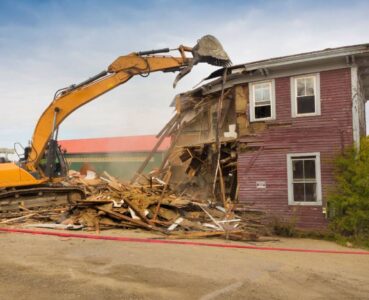

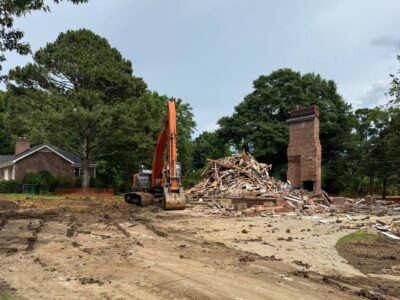
What to do with the land after a house is torn down in Charlotte
Key takeaways
- Most cleared lots in Mecklenburg County become housing again. Of demolitions matched to a new construction permit, 65% became single-family homes and 32% became townhomes or duplexes.
- You do not have to build right away. Lawn, gardens, and open yard space are valid uses and carry the lightest permitting load.
- Charlotte’s Unified Development Ordinance (UDO) governs what you can put on the lot. Since June 2023, even individual residential lot projects need drainage, urban forestry, and zoning review.
- An accessory dwelling unit (ADU) is one of the strongest value plays. Charlotte allows one ADU per qualifying lot, capped at 50% of the principal dwelling’s floor area and 1,000 heated square feet.
- Whatever you choose, grading and drainage come first. A properly graded, erosion-controlled lot protects the land and every option that follows.
First, finish the demolition properly
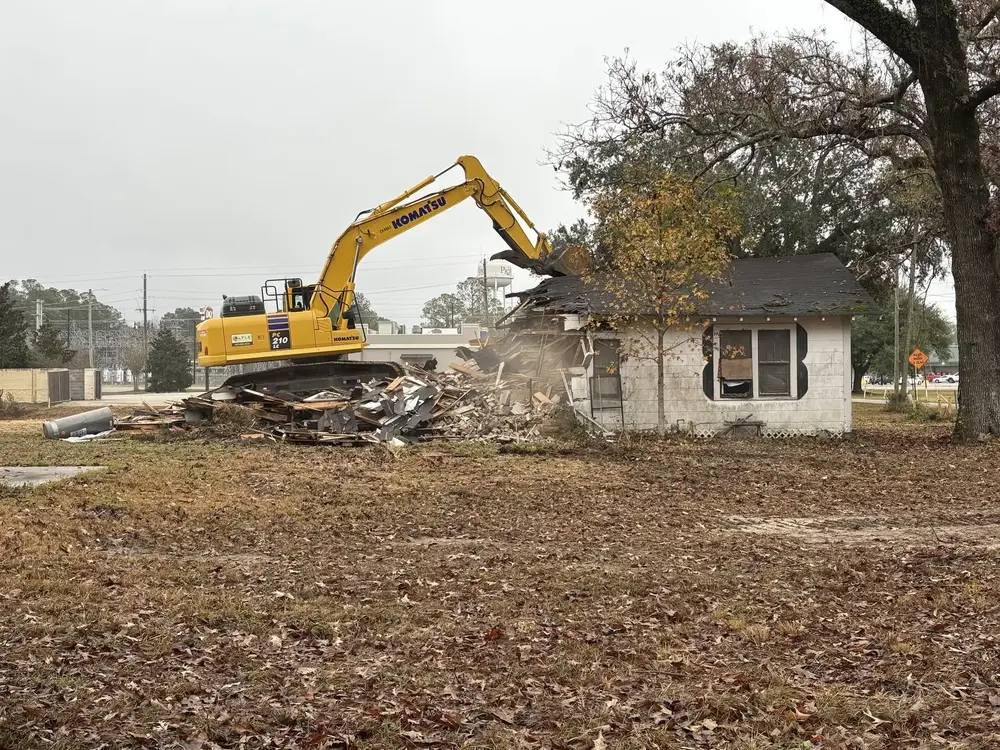
Before you plan anything, make sure the site is genuinely ready. A cleared lot is not the same as a finished lot. After the structure comes down, the remaining work may include debris haul-off, foundation or slab removal when included in the project scope, backfilling, and final grading. Utility disconnections and caps are handled by the property owner or the appropriate utility provider.
Skipping these steps causes real problems later. Buried debris settles and creates soft spots. Poor grading sends runoff onto a neighbor’s yard. Old foundations block a future build.
A cleared lot is not a finished lot. Grading and drainage decide what the land can become.
Charlotte also expects erosion control on vacant land, especially near streams and wetlands. If your lot sits close to a creek, check our guide on flood zones and demolition before you plan a structure.
What most Charlotte owners build on cleared lots
If you are wondering what other people do, the permit data gives a clear answer. The UNC Charlotte Urban Institute matched about a third of recorded demolitions in Mecklenburg County to a new construction permit at the same address. Housing dominated the results.
Graph 1. Share of matched rebuilds by type. Source: UNC Charlotte Urban Institute analysis of Mecklenburg County permit data.
Two-thirds of rebuilds became a single-family home. Nearly a third became a townhome or duplex, which reflects Charlotte’s shift toward attached housing on close-in lots. Only 3% turned commercial. So the typical answer to “what happens to the land” is simple: it becomes housing again, often denser than before.
Eight things to do with your land after a demolition
Here are the practical options we see across the Charlotte metro, roughly from lightest to heaviest lift.
1. Build a new single-family home
The most common path. You control the layout, the systems, and the finishes, and the new home sits on a lot you already own. New homes on Charlotte teardown lots average about 2,650 heated square feet, noticeably larger than the county’s typical home.
2. Build a duplex, triplex, or townhomes
Charlotte’s UDO opened up more housing types in its Neighborhood 1 districts. The N1-A through N1-E districts allow single-family, duplex, and triplex dwellings on all lots, and quadraplexes are allowed on arterial streets when an affordable unit is included. On a well-placed lot this can raise both density and return.
3. Add an accessory dwelling unit (ADU)
An ADU is a self-contained second unit, often a backyard cottage or garage apartment. Charlotte permits one ADU per qualifying single-family or duplex lot. It must stay subordinate to the main home, share ownership, and, when inside an accessory structure, stay under 50% of the principal dwelling’s floor area and no more than 1,000 heated square feet. ADUs suit multigenerational families and long-term rental income.
An ADU is often the highest-value use of a small cleared lot, but it carries real design and permitting rules.
4. Build a garage, workshop, or studio
Simpler to permit than a dwelling and still a genuine value-add. Detached accessory structures larger than 12 feet in any dimension trigger a City of Charlotte residential lot review, so plan for that step.
5. Expand the yard on an adjacent property
If you own the lot next door, folding the cleared land into your existing yard is often the easiest win. You gain outdoor space, light, and privacy with almost no permitting burden.
6. Create a garden or pollinator space
A former slab or driveway can become a vegetable garden, orchard, or native pollinator planting. This is a strong option for a lot you are holding, since it keeps the soil covered and the land maintained.
7. Hold the land as a maintained open lot
Sometimes the right move is to wait. Seed it, keep it mowed, keep erosion controlled, and let the neighborhood market mature. Just budget for upkeep, since Charlotte expects vacant lots to be maintained.
8. Sell the cleared lot
A graded, debris-free, build-ready lot is far more attractive to builders than one with a derelict house on it. Clearing the land is often what makes the parcel sellable in the first place.
Permitting effort by option
Not every option carries the same paperwork. The chart below shows our rough sense of the relative effort involved, from a simple lawn to a full residential build.
Graph 2. Relative permitting and review effort by land option. Bright LLC qualitative assessment, not an official ranking.
Since June 1, 2023, the City of Charlotte requires a separate submittal for individual residential lot projects through the Accela system. Storm Water, Urban Forestry, and Zoning review these concurrently. The list of triggering projects is broad and includes homes, duplexes, ADUs, garages, pools, decks, and retaining walls.
Comparing your options at a glance
| Option | Effort | Best when | Watch-outs |
|---|---|---|---|
| New single-family home | Highest | You want to live there or maximize resale | Full plan review, longest timeline |
| Duplex, triplex, townhomes | Highest | Zoning allows density and the location supports it | Height, setback, and lot-pattern rules |
| Accessory dwelling unit | High | You want rental income or family space | One per lot, size caps, shared ownership |
| Garage or workshop | Moderate | You need storage or work space | Review triggered above 12 ft in any dimension |
| Driveway, patio, fence | Moderate | You are improving an adjacent home | Drainage and impervious surface limits |
| Yard expansion | Low | You own the neighboring property | Combining parcels may need a lot recombination |
| Garden or green space | Low | You are holding the land long term | Ongoing maintenance |
| Maintained open lot | Lowest | You are waiting for the right moment | Upkeep and erosion control still required |
Table 1. Post-demolition land options in Charlotte, ranked by permitting effort.
What the land itself needs, whatever you choose
Some requirements apply no matter which path you pick. This is the part owners most often underestimate.
| Requirement | Why it matters |
|---|---|
| Final grading and positive drainage | Moves water away from structures and neighboring lots |
| Erosion and sediment control | Required on disturbed ground, and critical near creeks |
| Complete debris and foundation removal | Prevents settling and blocked future construction |
| Utility caps or disconnects | Safety, and a requirement before most new work |
| Soil quality and compaction check | Old fill and buried material can undermine a new foundation |
| Tree and urban forestry compliance | Charlotte reviews tree protection on residential lots |
Table 2. Site conditions that apply to every post-demolition option.
Whatever you build, the lot has to drain, hold, and support it. That work happens once, at the start.
A simple way to decide
Ask three questions in order.
- Are you keeping the land or selling it? If selling, stop at a clean, graded, build-ready lot. That alone lifts value.
- Does the zoning allow what you want? Check your district in the Charlotte UDO before you design anything. Zoning decides whether a duplex or ADU is even possible.
- Are you building now or later? If later, invest in grading, drainage, and ground cover, then keep the lot maintained until you are ready.
Common mistakes to avoid
- Leaving debris or the old foundation in place. It settles, it blocks new construction, and it lowers the lot’s value.
- Ignoring drainage. Runoff onto a neighbor’s property creates disputes and sometimes liability.
- Designing before checking zoning. Plenty of owners draw up an ADU on a lot that will not support one.
- Skipping the city residential lot review. Since 2023 it applies to far more projects than people expect.
- Letting a vacant lot go wild. Overgrowth and erosion invite code complaints and neighbor friction.
This article is general information, not legal or financial advice. Confirm zoning, permits, and setbacks with the City of Charlotte and Mecklenburg County before you commit.
Conclusion
After a house comes down in Charlotte, the land has more potential than most owners realize. Most cleared lots become housing again, and a new home, a duplex, or an ADU are usually the highest-value paths. But a garden, an expanded yard, or a well-kept open lot can be exactly right depending on your timeline.
The one constant is the groundwork. A properly cleared, graded, and drained lot is what makes every other option possible.
Clear it right once, and every future use of the land gets easier.
Bright LLC provides house demolition, land clearing, excavation, grading, and debris haul-off across Charlotte, Matthews, Indian Trail, Monroe, Mint Hill, Midland, Concord, Gastonia, Mooresville, Davidson, Huntersville, Statesville, Rock Hill, Fort Mill, and Indian Land. See finished work on our project gallery, learn about our team on the about page, or contact us for a free quote.
Frequently asked questions (FAQ)
What should I do with my land right after a house is demolished in Charlotte?
Start with site completion: remove all debris and the old foundation, backfill and compact any basement or crawl space, and grade the lot for drainage. Bright LLC can coordinate utility disconnections before the next phase. Once the land is stable and build-ready, you can decide between building, landscaping, holding, or selling.
Do I need a permit to build on a lot after demolition in Charlotte?
Yes, for nearly any structure. Since June 1, 2023, the City of Charlotte requires an individual residential lot review covering drainage, urban forestry, and zoning. Mecklenburg County still handles building code permits separately.
Can I build an ADU on my cleared Charlotte lot?
Often yes. Charlotte allows one ADU per qualifying single-family or duplex lot. The ADU must share ownership with the principal dwelling and, when in an accessory structure, stay under 50% of the main home’s floor area and no more than 1,000 heated square feet. Setback and height rules still apply.
Can I build a duplex or triplex instead of a single-family home?
In many Neighborhood 1 districts, yes. The N1-A through N1-E districts allow single-family, duplex, and triplex dwellings, with quadraplexes permitted on arterial streets when an affordable unit is included. Confirm your specific parcel’s zoning first.
Do I have to build anything at all?
No. You can keep the parcel as maintained open space, a garden, or expanded yard. Just plan for upkeep, since Charlotte expects vacant lots to be maintained and erosion controlled, particularly near streams.
Does clearing the land increase my property value?
It usually helps, especially if you intend to sell. Builders pay more for a graded, debris-free, build-ready lot than for a parcel with a derelict structure on it. Actual value depends on location and zoning, so check comparable sales.
Does Bright LLC handle site prep after the demolition?
Yes. In full-service areas we handle grading, concrete and foundation removal, material delivery, and site preparation alongside demolition and debris removal, so the lot is ready for your builder. Request a free quote.
Sources and further reading
- Charlotte Unified Development Ordinance (UDO), full articles
- Charlotte UDO Article 4, Neighborhood 1 Zoning Districts
- City of Charlotte, Individual Residential Lot Reviews
- Mecklenburg County Code Enforcement, Demolition Permits
- UNC Charlotte Urban Institute, Mapping Charlotte’s Lost Buildings
- Charlotte-Mecklenburg Storm Water Services
Just tore down a house? Bright LLC leaves you a clean, graded, build-ready lot. Get your free quote today.
SEO notes
- Suggested title tag: What to do with theland after a house is torn down in Charlotte – Bright LLC
- Suggested meta description: Your Charlotte lot is cleared, now what? Compare new builds, duplexes, ADUs, gardens, and selling, plus the grading and permit rules that apply to every option
- Suggested image alt text: “What gets built on cleared lots in Mecklenburg County” and “Permitting effort by land option after demolition in Charlotte”
Note on duplicate content
Bright LLC already has a page at brightllc.us/what-to-do-with-the-land-after-a-house-is-torn-down/ . To avoid competing with yourself in search, either (a) replace that page’s content with this expanded version and keep the existing URL, or (b) publish this at a new URL and 301-redirect the old one. Do not run both.
Clear the way — call a professional
Need help with demolition, excavation, or land clearing? Don’t wait — our crew is ready 24/7 to take on your project safely and efficiently.
Related Services
Land clearing
Get in touch today