What Happens to Concrete After Removal? Recycling and Recycled Concrete Aggregate
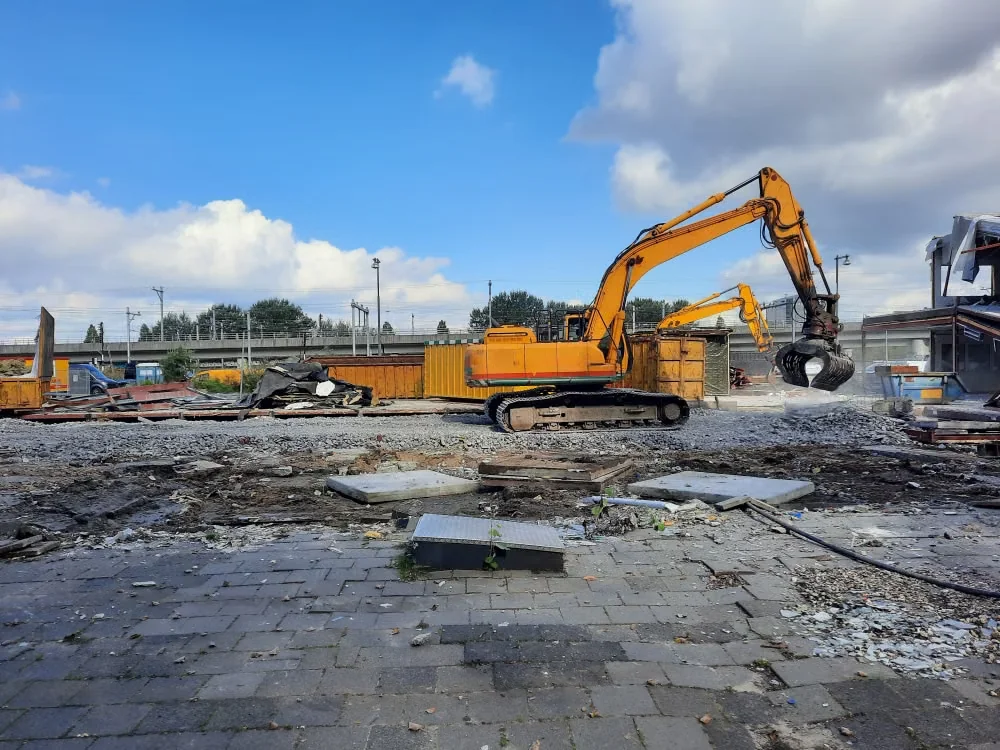
When an old driveway, slab, or foundation gets torn out, the broken concrete does not just vanish. It goes one of two places: a landfill, or a recycling facility where it is crushed into new, usable material. More and more of it takes the second path, and for good reason. This guide follows demolished concrete from the moment it leaves your property, explains how concrete recycling turns rubble into recycled concrete aggregate, and shows where that crushed concrete gets used next, sometimes as the base under a brand-new driveway.
Key takeaways
- Removed concrete goes to a recycling facility or a landfill. Recycling is increasingly the default, because concrete is one of the most reusable demolition materials.
- Concrete recycling is simple in principle: crush the rubble, screen out the rebar and debris, and sort it by size into recycled concrete aggregate (RCA).
- Recycled concrete aggregate works as a base material under driveways, roads, parking areas, and slabs, and as fill and pipe bedding.
- Crushed concrete is cheaper and greener than virgin stone. It costs less, cuts landfill waste, and reduces demand for quarried aggregate.
- Bright LLC hauls your old concrete to a recycling facility and can deliver crushed concrete aggregate as a base material for your next project.
What happens to demolished concrete after removal?
Once a crew breaks up a slab or driveway, the concrete becomes construction and demolition (C&D) debris, and it has to be hauled off your property. From there it takes one of two routes.
The first is concrete disposal at a landfill, the old default, where it takes up space and does nothing useful. The second, and now the common choice, is a C&D recycling facility, where the concrete is processed into fresh aggregate and sold back into new construction.
Concrete is worth recycling because there is so much of it. According to the US EPA, the country generates hundreds of millions of tons of construction and demolition debris each year, and concrete makes up the single largest share by weight. Diverting it from landfills is one of the biggest wins in construction waste.
At Bright LLC, we break out and haul off your old concrete and take it to a recycling or disposal facility, so it leaves your site cleanly and, wherever possible, gets a second life.
Demolished concrete is not waste by default. Crushed and screened, it becomes the base material for the next driveway, road, or slab.
How concrete recycling turns rubble into aggregate
The process that turns a torn-out driveway into usable stone is straightforward.
- Collection. Clean concrete rubble is gathered and separated from other demolition debris.
- Crushing. The concrete runs through crushers that break it down into smaller, consistent pieces.
- Rebar and metal removal. Magnets and screens pull out the steel reinforcement and other non-concrete material.
- Screening and sorting. The crushed material is screened and sorted into sizes, from fine particles to larger chunks, depending on how it will be used.
The result is recycled concrete aggregate, a clean, graded product ready to go back to work. The whole point of concrete recycling is that the hardest, most durable part of your old structure becomes raw material again instead of landfill.
What is recycled concrete aggregate (RCA)?
Recycled concrete aggregate, or RCA, is crushed, screened concrete reclaimed from demolished slabs, driveways, foundations, and roads. In the yard and on the job site it is often just called crushed concrete.
It behaves much like quarried crushed stone. It compacts into a dense, stable layer, it drains, and it carries load, which is exactly what a base material needs to do. Produced to the right size and quality, RCA performs comparably to virgin aggregate for most non-structural and base applications. It is sold in a range of sizes, from fine material up to larger base rock, and it is one of the crushed aggregates we can deliver through our gravel delivery service.
Where crushed concrete is used: base, driveways and fill
Once it is crushed and sorted, recycled concrete does real work across construction and landscaping.
| Use | What crushed concrete does |
|---|---|
| Road and parking base | Compacts into a firm sub-base under pavement |
| Crushed concrete driveway | Serves as an affordable base or surface layer |
| Pavement subgrade | Stabilizes the ground under new asphalt or concrete |
| Trench and pipe backfill | Fills and beds utility work with good drainage |
| Retaining wall backfill | Drains and compacts behind the wall |
| Site fill and leveling | Builds up and levels uneven ground |
| Temporary roads and pads | Makes stable access and staging on job sites |
A crushed concrete driveway is one of the most popular uses. It gives you a solid, well-draining base or a budget-friendly driving surface at a lower cost than new stone, which is why it is a favorite for rural lots, long drives, and farm access. If you are weighing it against other options, our guide to gravel and base materials covers how the sizes compare.
The concrete you pay to remove can come back as the base you build on. That is the whole case for recycling it.
Recycled concrete vs virgin stone: the benefits
Choosing recycled concrete aggregate over freshly quarried stone pays off three ways.
- Lower cost. RCA takes fewer resources to produce and is often cheaper than virgin aggregate, with the savings growing on larger jobs.
- Less landfill waste. Every ton recycled is a ton that does not take up landfill space, which is the biggest environmental win.
- Fewer quarried resources. Using RCA reduces demand for mined gravel and crushed stone, preserving natural aggregate.
- Green building credit. Recycled content can help projects earn LEED points or meet other sustainability goals.
For most base, fill, and sub-base uses, the performance gap with virgin stone is small, and the cost and environmental gaps are real.
Recycling vs concrete disposal: the landfill alternative
It helps to see the two paths side by side.
| Factor | Concrete recycling | Landfill disposal |
|---|---|---|
| Environmental impact | Diverts waste, saves resources | Fills landfill space |
| Cost | Often lower, material has value | Disposal and tipping fees |
| End result | Usable aggregate | Buried waste |
| Availability | Widely available at C&D facilities | Always available |
Recycling is not always possible for every load, since heavily contaminated or mixed concrete may have to be disposed of. But for clean concrete, recycling is usually the better outcome on cost and sustainability alike. Whichever route your load takes, our debris removal service handles the full haul-off so nothing is left on your site.
For what the removal itself costs, see our breakdown of concrete removal cost after demolition in Charlotte.
Frequently asked questions
What happens to concrete after it is removed?
Removed concrete is hauled off as construction and demolition debris and taken to either a recycling facility or a landfill. At a recycling facility it is crushed, cleaned of rebar, and screened into recycled concrete aggregate for reuse. Clean concrete is usually recycled rather than landfilled.
What is recycled concrete aggregate?
Recycled concrete aggregate (RCA), also called crushed concrete, is crushed and screened concrete reclaimed from demolished slabs, driveways, foundations, and roads. It compacts and drains like quarried stone and is used as a base material, fill, and pipe bedding.
Can you use crushed concrete for a driveway?
Yes. A crushed concrete driveway uses recycled concrete aggregate as an affordable, well-draining base or surface. It compacts into a firm layer and costs less than new crushed stone, which makes it popular for rural and long driveways.
Is recycled concrete as good as virgin stone?
For most base, sub-base, and fill uses, RCA from a reputable source performs comparably to virgin aggregate. It compacts, drains, and carries load well. For certain structural concrete uses, virgin stone or a tested mix may still be specified, so confirm the spec for your project.
Is crushed concrete cheaper than gravel?
Often yes. Recycled concrete usually costs less than freshly quarried gravel or crushed stone because it takes fewer resources to produce and transport. The savings are most noticeable on larger jobs.
What is the difference between recycling and disposing of concrete?
Recycling crushes clean concrete into reusable aggregate, keeping it out of the landfill and giving the material value. Disposal sends it to a landfill as buried waste, usually with tipping fees. Recycling is the preferred route for clean concrete on both cost and environmental grounds.
Service areas
Bright LLC provides concrete removal, haul-off, and crushed aggregate delivery across the Charlotte metro and surrounding Carolinas, including Charlotte, Concord, Rock Hill, Gastonia, Monroe, Mooresville, Statesville, Davidson, Fort Mill, Huntersville, Indian Trail, Mint Hill, Midland, Matthews, and Indian Land.
Conclusion
After removal, concrete has a far better destiny than a landfill. Crushed and screened into recycled concrete aggregate, your old driveway or slab becomes a durable base material that drains, compacts, and carries load, often at a lower cost than virgin stone and with a real environmental payoff. The hardest part of your old structure gets to do its job all over again.
Have concrete to tear out? Book concrete removal and haul-off with Bright LLC, and we will break it out, haul it to a recycling facility, and can deliver crushed concrete aggregate for your next project.
Sources
- US EPA, Sustainable Management of Construction and Demolition Materials
- Laney Recycling, what is recycled concrete aggregate and how is it used