
57 Stone vs Crusher Run (ABC): Which Base Material Does Your Project Need?
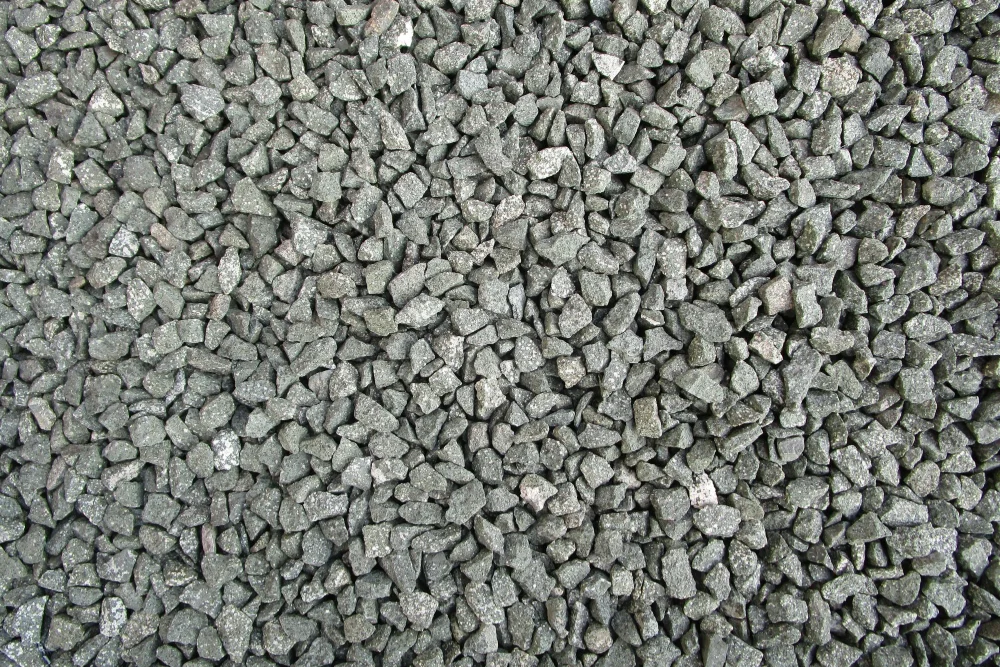
Stand over two piles of gray crushed stone and they can look identical, but one drains and one compacts, and that single difference decides whether your project succeeds or fails. Pour water on a bed of 57 stone and it disappears straight through; pour it on compacted crusher run and it runs off the top. Choose wrong and a driveway ruts under the first heavy truck, or a drainage layer clogs and holds water against your foundation. The good news is that picking the right base material is simple once you know what separates them. Here is how 57 stone and crusher run (ABC) differ, and exactly which one your driveway, pad, footing, or drain actually needs.
Key takeaways
- #57 stone drains. Crusher run compacts. That one difference decides almost every project.
- 57 stone is clean, angular stone about 1 inch down to the No. 4 sieve, with no fines. Water pours straight through it, so it is the choice for drainage, backfill, and wet-site bases.
- Crusher run (ABC) ranges from about 1 inch down through stone dust. The fines let it compact into a hard, tight surface, which is why it is the standard for driveways and pads.
- Many projects use both: a #57 drainage layer on the bottom, a crusher run driving surface on top.
- Order by the ton or cubic yard, and confirm the depth per layer before delivery so you do not run short.
The one difference that matters: fines
The difference is hiding in the smallest particles, and it changes everything about how the material behaves.
Fines are the stone dust and sand-sized particles left over from crushing. A material with fines packs tight and locks up when you compact it. A material without fines stays open, with air gaps between every stone that let water run through.
That single property splits your two main base materials. Crusher run is full of fines and compacts hard. 57 stone has the fines washed or screened out and drains freely. Get this right and the rest of the decision is easy.
#57 stone drains. Crusher run compacts. Almost every base-material question comes down to which of those two jobs you need done.
What is 57 stone?
57 stone (also written #57 stone) is a clean, single-size crushed aggregate. Under the NCDOT aggregate gradation in Table 1005-1, it runs from roughly 1 inch down to the No. 4 sieve, with essentially nothing passing through to dust. Because the small particles are gone, the stones cannot nest tightly together. Instead they leave open voids, and water moves through the layer fast.
That makes 57 stone the right call whenever drainage is the goal:
- Drainage layers and French drains
- Backfill behind retaining walls
- Bases on wet or poorly draining sites
- Sub-base under a garage or shed slab
- Pipe and utility bedding
- The bottom layer of a driveway built over soft ground
What 57 stone does not do is compact into a smooth, bound surface. Drive on a loose bed of it and the angular stones lock against each other, but they never form the tight crust that a finished driveway needs. For that, you want crusher run.
What is crusher run (ABC)?
Ask three suppliers and you may hear three names for the same material. Crusher run, crush and run, and ABC all describe the same dense-graded aggregate. In North Carolina the official term is ABC, short for Aggregate Base Course, defined in NCDOT Standard Specifications Section 520 and produced to the ABC gradation in Table 1005-1.
So what is crusher run? It is crushed stone that ranges from a top size of about 1 to 1½ inches all the way down through stone dust, with roughly 5 to 15 percent passing the No. 200 sieve. That full spread of sizes is the point. The big stones carry the load, and the fines fill the gaps between them. When you compact it, the whole mass locks into a dense, hard, nearly paved surface.
That is why crusher run for driveway projects is the default:
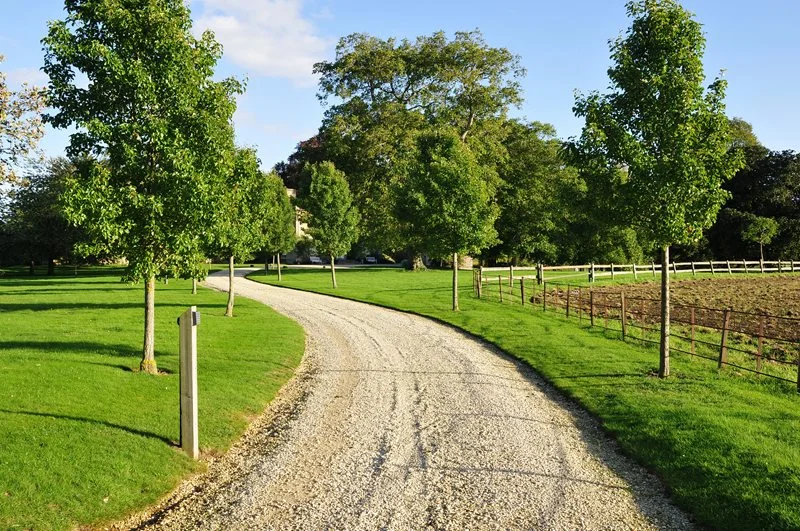
- Driveway base and driving surface
- Parking areas and equipment pads
- A compacted base under pavers, slabs, or asphalt
- Road and lane construction
- Any surface that has to bear traffic without rutting
The trade-off is drainage. Because the fines fill the voids, water does not pass easily through a compacted crusher run layer. It sheds off the top instead, which is exactly why the surface needs a slight crown or slope. (Our guide on preparing raw land for a driveway walks through that slope and the full layer build.)
57 stone vs crusher run, side by side
Here is the 57 stone vs crusher run comparison in one view.
| Feature | 57 stone | Crusher run (ABC) |
|---|---|---|
| Size range | ~1 in down to No. 4 sieve | ~1–1½ in down to stone dust |
| Fines / dust | None | 5–15% fines |
| Compacts to hard surface | No, stays loose and open | Yes, locks up tight |
| Drainage | Excellent, water flows through | Poor, water sheds off top |
| Best job | Drainage, backfill, bedding | Driveways, pads, base |
| Also called | #57, washed stone | Crush and run, ABC stone |
Which one you need depends on whether water has to move through the layer or you need a surface to drive on.
Which one does your project need?
Match the material to the job.
| Your project | Use this | Why |
|---|---|---|
| New gravel driveway surface | Crusher run (ABC) | Compacts to a firm driving surface |
| Base under pavers or a slab | Crusher run (ABC) | Dense, stable, non-shifting base |
| French drain or drainage trench | 57 stone | Open voids carry water away |
| Retaining wall backfill | 57 stone | Drains so water does not build pressure |
| Driveway over soft or wet soil | Both, layered | 57 stone below to drain, crusher run on top |
| Pipe or utility bedding | 57 stone | Cradles pipe and drains |
| Muddy area you need to stabilize | Crusher run (ABC) | Packs into a hard, walkable surface |
On a soft or wet site, do not choose one or the other. Put 57 stone down first to drain the ground, then crusher run on top to drive on. The combination outlasts either material alone.
A quick word on other options
57 stone and crusher run cover most base and drainage work, but two related materials come up often:
- ABC stone is simply the North Carolina name for crusher run, as noted above. If a spec or a builder asks for “ABC,” they mean dense-graded crusher run.
- Recycled concrete aggregate is crushed concrete reclaimed from removed slabs, driveways, and foundations. It behaves much like crusher run as a compactable base at a lower price point, and it keeps material out of the landfill. It is one of the materials we can deliver.
If you are still weighing gravel against sand or soil for a job, our guide on how to choose the right type of gravel, sand, or soil for your project lays out the full range.
How much do you need?
Both materials are sold by the ton or the cubic yard. To estimate cubic yards, use:
Square feet × depth in inches ÷ 324 = cubic yards.
For example, a 600 square foot pad at 4 inches deep needs 600 × 4 ÷ 324, or about 7.4 cubic yards. Add roughly 10 to 15 percent for compaction and edge spillage, and order around 8.5 cubic yards. Crusher run loses volume when compacted, so the buffer matters more with ABC than with open 57 stone.
Confirm the depth for each layer before you order. Running short in the middle of a job means paying a second delivery fee for a small load. Our material delivery team can help you size the order from your measurements.
Frequently asked questions
What is the difference between 57 stone and crusher run?
57 stone is clean, single-size crushed stone with no fines, so it drains freely and does not compact into a hard surface. Crusher run (ABC) contains stone dust and a full range of sizes, so it compacts into a dense, firm base. Use 57 stone for drainage and backfill, and crusher run for driveways and pads.
Is crusher run or 57 stone better for a driveway?
Crusher run is better as the driving surface because it compacts to a hard, tight layer that resists rutting. On soft or wet ground, contractors often place a 57 stone layer underneath for drainage, then crusher run on top. 57 stone alone stays loose and is not a good final driveway surface.
What is ABC stone?
ABC stands for Aggregate Base Course, the North Carolina term for dense-graded crusher run. It is the same material as crush and run: crushed stone from about 1 to 1½ inches down through stone dust, produced to the NCDOT ABC gradation and used as a compactable base.
Does 57 stone compact?
Not into a bound surface. The angular stones lock against each other, but with no fines to fill the gaps, 57 stone keeps open voids and stays loose. That is what makes it drain well, and also why it is not used as a finished driving surface.
Can I use recycled concrete instead of crusher run?
Often, yes. Recycled concrete aggregate compacts much like crusher run and works well as a base material at a lower cost. It is a good option for pads, sub-bases, and budget driveways. Confirm the material is clean and correctly sized for your project.
How much crusher run or 57 stone do I need?
Multiply the area in square feet by the depth in inches, divide by 324 for cubic yards, then add 10 to 15 percent for compaction and spillage. Both are also sold by the ton. Send us your measurements and we can size the load for you.
Service areas
Bright LLC delivers 57 stone, crusher run, and other bulk materials across the Charlotte metro and surrounding Carolinas, including Charlotte, Concord, Rock Hill, Gastonia, Monroe, Mooresville, Statesville, Davidson, Fort Mill, Huntersville, Indian Trail, Mint Hill, Midland, Matthews, and Indian Land.
In Charlotte, demand for gravel delivery runs high year-round as new construction, driveways, and drainage projects keep crews busy across the county. Whether you need a few yards of 57 stone for a French drain in Myers Park or a full base of crusher run for a driveway in Steele Creek, we deliver the right material to your site on schedule.
Conclusion
The choice between 57 stone and crusher run is not complicated once you know the rule. If you need water to move through the layer, choose 57 stone. If you need a hard surface to drive or build on, choose crusher run (ABC). And on tricky wet ground, use both, in that order. Get the material right and the base does its job quietly for years.
Ready to order? Order 57 stone or crusher run delivered from Bright LLC, and we will bring the right material to your Charlotte-area site.
Sources
- NCDOT Standard Specifications for Roads and Structures (Section 520 and Table 1005-1, aggregate gradations)
- City of Gastonia standard specifications, Section 3.0 Stone (ABC and #57 washed stone, citing NCDOT)
Not sure which stone fits your project?
Tell us the job, and Bright LLC delivers the right material to your site.
Get in touch today