
Preparing raw land for a driveway: clearing, grading, and gravel basics
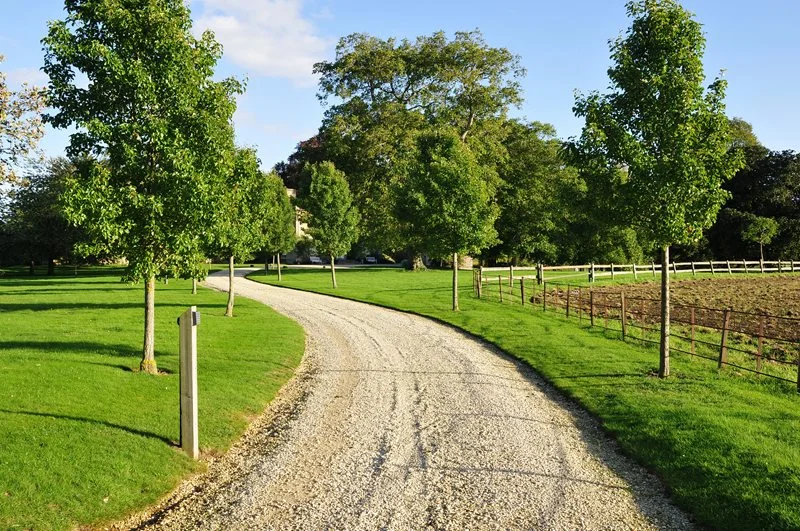
You bought the land. You can already picture the drive curving up to the house. Then the reality sets in: right now it is dirt, brush, and maybe a few trees, and somewhere under all of it is the driveway you want.
Here is the part most people get wrong. A gravel driveway is not a pile of stone spread over the ground. It is a layered structure, and the layer you never see does almost all of the work. The ruts, the potholes, the muddy low spots that plague cheap driveways almost never come from the gravel. They come from what happened, or did not happen, before the gravel arrived.
Preparing raw land for a driveway follows a clear order: clear the route, grade for drainage, excavate to depth, lay fabric, then build and compact the stone. Miss a step and the driveway fails from the bottom up, usually within a couple of years. Do it right and you barely think about it again. This guide walks through each stage, what it costs in 2026, and the questions worth asking before the first truck shows up.
Key takeaways
- A driveway is built from the bottom up. The base does the work. The surface stone is just what you see and drive on.
- The order matters: clear, grade, fabric, base, surface. Skip or rush a step and the driveway fails from the ground up, usually within two years.
- Grading sets the slope. A 1 to 2 percent crown moves water off the surface and prevents the puddles, ruts, and potholes that destroy gravel drives.
- Geotextile fabric is cheap insurance. For $75 to $150 it stops your stone from sinking into soft soil, the single most common reason gravel driveways fail early.
- Order 10 to 15 percent extra gravel. Compaction and edge spillage eat the difference, and a second delivery costs another trip fee.
Why site prep decides everything
Most people think a gravel driveway is just a pile of stone spread over the ground. That is exactly why so many fail. A driveway is a layered structure, and almost every problem you have ever seen, the ruts, the potholes, the muddy low spots, traces back to what happened before the gravel arrived.
Good site preparation is invisible when it is done right. You never notice the compacted base or the careful slope. You only notice when they are missing.
At Bright LLC we do this work in sequence: land clearing, grading, excavation, and gravel and material delivery. This guide walks through each stage so you know what to expect and what questions to ask.
A driveway is only as good as what is under it. The base does the work. The surface just shows.
Step one: clear the path
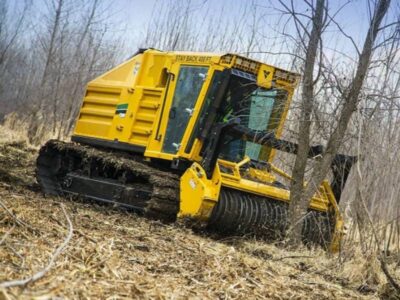
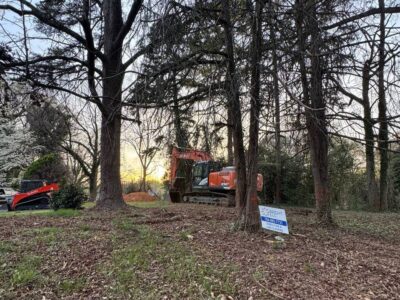
Before anything else, the driveway route has to be cleared down to workable ground. That means removing trees, brush, stumps, roots, and any old surface material along the path and a working margin on each side.
Clearing is more than cutting things down. Roots and organic matter left in the ground will rot, and as they decompose they leave voids that let the driveway settle and sag. So clearing also means grubbing out roots and stripping the organic topsoil layer, which is not a stable base for traffic.
Land clearing typically runs about $1.20 to $2.00 per square foot, and heavily wooded lots cost more. Tree removal averages around $660 per tree, and stump removal runs roughly $2 to $4 per inch of trunk diameter. Debris has to go somewhere too, so factor in debris removal and haul-off.
Organic matter is the enemy of a stable driveway. If it can rot, it will, and the surface sinks with it.
Step two: grade for drainage
This is the step that quietly decides whether your driveway survives. Grading shapes the cleared ground so water runs off instead of pooling, and so the surface sits level and stable.
Two things happen during grading:
- Slope. The driveway needs a slight crown or cross-slope, usually a 1 to 2 percent grade, so water sheds to the sides instead of sitting on the surface. Standing water is what creates potholes and washes gravel away.
- Compaction. The subgrade soil is compacted to give the base something firm to sit on. Loose soil lets everything above it shift.
Grading a driveway generally costs $0.50 to $2.00 per square foot for straightforward work, and more where the land slopes hard or drains poorly. If water currently runs toward the house or collects in a low spot, that has to be solved here, not later.
Step three: excavate the base depth
With the route cleared and roughly graded, the driveway profile is excavated to make room for the stone. A typical residential driveway needs 8 to 12 inches of excavation depth, deeper for soft clay soils that need a thicker base.
Excavation usually costs $1.00 to $2.00 per square foot. Soil type matters a lot here. Firm, well-draining soil is quick. Wet clay is slow, and it often needs a deeper base plus fabric to stay stable.
Step four: lay geotextile fabric
Here is the cheapest, most overlooked step in the whole project. Geotextile fabric is a permeable sheet that sits between the subgrade soil and the base gravel. It lets water through but stops the two layers from mixing.
Without it, your base stone slowly presses down into soft soil, and the soil pumps up into the stone. Within a year or two the driveway is rutted and thin. Fabric costs just $75 to $150 for a standard driveway and can save hundreds in replacement gravel over the following decade. For difficult soils, a geogrid adds even more stability.
Step five: build the gravel layers
A proper gravel driveway is not one material. It is three compacted layers, each with a different job.
| Layer | Common material and names | Typical depth | What it does |
|---|---|---|---|
| Base course | Crusher run, ABC, quarry process, #411 | 4 to 6 inches | Carries the load and spreads weight |
| Middle course | #57 crushed stone | 2 to 3 inches | Drains water and locks the base |
| Surface course | #8 stone, crusher-run fines, or pea gravel | 1 to 2 inches | The driving surface you see |
Table 1. The three layers of a gravel driveway.
Each layer is spread and compacted separately. Compaction is the single biggest factor in how long the driveway lasts, and it is where professional equipment earns its keep. A dumped, uncompacted pile of gravel is not a driveway. It is a future repair.
Choosing your gravel
Gravel names are confusing because the same material goes by several names. Here is a quick translation.
| Gravel type | Also called | Best used as |
|---|---|---|
| Crusher run | ABC, quarry process, dense grade, #411 | Base layer, compacts rock-hard |
| #57 stone | Clean 3/4-inch crushed stone | Middle drainage layer |
| #8 stone / pea gravel | Fine crushed or rounded stone | Surface course |
| Recycled concrete | Crushed concrete aggregate | Budget base layer |
| Recycled asphalt | Millings, RAP | Budget self-compacting surface |
Table 2. A plain-language guide to driveway gravel.
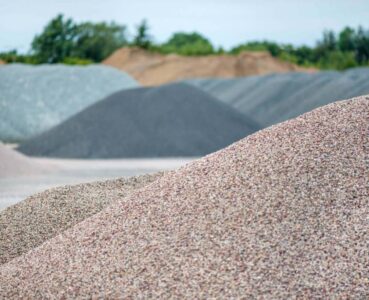
Buy in bulk from a local source rather than bagged stone, which can cost three to five times more per ton. If you want a refresher on how bulk material is measured and how it differs from soil, see our guide on fill dirt vs topsoil vs clean fill.
How much gravel do you need?
Bulk stone is sold by the cubic yard or the ton. To find cubic yards, use this formula:
Square feet × depth in inches ÷ 324 = cubic yards.
For example, a 1,000 square foot driveway with a total of 8 inches of stone needs 1,000 × 8 ÷ 324, or about 24.7 cubic yards. Then add 10 to 15 percent for compaction and edge spillage, so you would order around 28 cubic yards.
Order 10 to 15 percent extra. Compaction takes about 10 percent, and spillage takes the rest. Running short means paying a second delivery fee for a small load.
What a gravel driveway costs
Phase by phase, here is where the money goes.
Put together, a finished gravel driveway commonly runs $1 to $5 per square foot installed, and up to around $10 when heavy site preparation, tree removal, or drainage work is involved. For a 1,000 square foot driveway, that is roughly $4,000 to $10,000 on the higher-prep end. Gravel is still the most affordable paved option, well below asphalt and concrete.
| Phase or item | Typical cost |
|---|---|
| Land clearing | $1.20 to $2.00 per sq ft |
| Grading | $0.50 to $2.00 per sq ft |
| Excavation | $1.00 to $2.00 per sq ft |
| Geotextile fabric | $75 to $150 total |
| Gravel driveway, installed | $1 to $5 per sq ft |
| Tree removal | around $660 per tree |
| Stump removal | $2 to $4 per inch of diameter |
Table 3. Gravel driveway cost quick reference. Confirm local pricing.
Costs drop per square foot on longer driveways, because setup and mobilization are fixed. They rise with rock, steep slopes, poor drainage, and long hauls.
Do not skip these
- Grading and slope. No crown means standing water, and standing water means potholes.
- Geotextile fabric. The cheapest insurance against a sinking base.
- Layer compaction. Compact each layer, not just the top. This is what makes it last.
- Root and organic removal. Anything that can rot will, and the surface settles with it.
- The extra 10 to 15 percent of gravel. Ordering exactly your calculated amount always leaves you short.
- Call 811 if you are excavating near utilities. In North Carolina, excavation requires a locate request to NC811 before you dig.
This article is general information, not engineering advice. Soil, slope, and drainage vary by site. A professional assessment is worth it before a big driveway project.
How Bright LLC handles it
Because these steps depend on each other, doing them with one crew keeps the driveway consistent from the subgrade up. We clear the route, grub the roots, grade for drainage, compact the subgrade, lay fabric, and deliver and compact each gravel layer, then finish with a clean, crowned surface.
Bright LLC provides land clearing, grading, excavation, and gravel and fill delivery across Charlotte, Concord, Huntersville, Matthews, Waxhaw, Gastonia, and the surrounding Carolinas. See finished work on our project gallery, read more guides on our blog, or learn about our team on the about page.
Conclusion
A lasting driveway is built in the right order: clear the route, grade for drainage, excavate to depth, lay fabric, then build and compact three gravel layers. The visible stone is the smallest part of the job. The base, the slope, and the compaction underneath are what carry the weight and shed the water for years.
Clear, grade, fabric, base, surface. Miss a step and the driveway fails from the bottom up.
Planning a new driveway on raw land? Contact Bright LLC for a free clearing, grading, and gravel quote, and we will build it to last from the subgrade up.
Frequently asked questions (FAQ)
What are the layers of a gravel driveway?
A proper gravel driveway has three compacted layers over a fabric-covered subgrade: a base course of crusher run or ABC (4 to 6 inches), a middle course of #57 crushed stone (2 to 3 inches), and a surface course of finer stone or pea gravel (1 to 2 inches). Each layer is compacted separately.
How deep should a gravel driveway be?
Most residential gravel driveways are excavated 8 to 12 inches deep to hold all three gravel layers. Soft clay soils need the deeper end plus geotextile fabric. The total finished stone depth is usually 8 to 12 inches.
What type of gravel is best for a driveway?
Crusher run (also called ABC or quarry process) is the standard base because it compacts hard. A middle layer of #57 stone adds drainage, and a surface of #8 stone or crusher-run fines gives a smooth driving surface. Recycled concrete or asphalt can serve as budget alternatives.
How much does a gravel driveway cost?
A finished gravel driveway typically costs $1 to $5 per square foot installed, and up to about $10 with heavy clearing, grading, or drainage work. For a 1,000 square foot driveway, budget roughly $4,000 to $10,000 on the higher-prep end. It remains cheaper than asphalt or concrete.
Do I need landscape fabric under a gravel driveway?
In most cases, yes. Geotextile fabric costs $75 to $150 and prevents the base stone from sinking into soft soil, which is the most common reason gravel driveways fail within the first two years. On very firm, well-draining soil it is less critical, but it is cheap insurance.
How much slope does a gravel driveway need?
A crown or cross-slope of about 1 to 2 percent is standard. That is enough to shed water to the sides without being uncomfortable to walk or drive on. Proper slope is the main defense against puddles, ruts, and potholes.
Does Bright LLC clear land and install gravel driveways?
Yes. We handle the full sequence: land clearing, stump and debris removal, grading for drainage, excavation, and gravel and fill delivery across the Charlotte metro and surrounding Carolinas. Request a free quote.
Sources and further reading
- HomeAdvisor, gravel driveway and road cost
- Bob Vila, how much does a gravel driveway cost
- NC811, Call Before You Dig
Building a driveway from raw land? Bright LLC clears, grades, and delivers the gravel, and builds it to last. Get your free quote today.
Building a driveway from raw land?
Bright LLC clears, grades, and delivers the gravel, and builds it to last.
Related Services
Gravel delivery
Land clearing
Material delivery
Get in touch today