
Material delivery cost in Charlotte: what impacts the price?
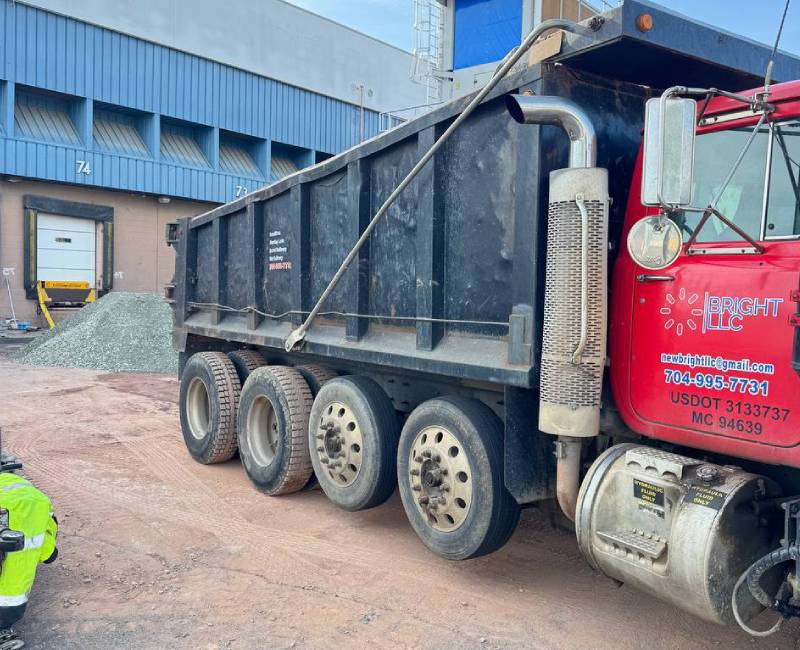



If you’re planning a construction project, landscaping upgrade, or home renovation in Charlotte, one question comes up early: how much will material delivery actually cost? Whether you’re hauling gravel, topsoil, mulch, or concrete, delivery fees can vary dramatically based on distance, load size, material type, and even the time of year. At Bright LLC, we handle material delivery across Charlotte and the surrounding areas, and we’ve seen how small differences in planning can swing costs by hundreds of dollars. Here’s what really drives pricing and how to keep your delivery budget under control.
What affects material delivery price in Charlotte
Material delivery isn’t a flat-rate service. Every order is shaped by a combination of factors that influence fuel costs, driver time, equipment needs, and logistical complexity. Before a single truck rolls out, delivery companies calculate:
- Distance and location: a delivery within Charlotte city limits costs far less than hauling materials to rural Gaston or Union County.
- Material type and weight: dense materials like stone or concrete require heavier-duty trucks and cost more per ton than lightweight mulch or topsoil.
- Load size and volume: larger orders may qualify for bulk discounts, while smaller loads can carry minimum delivery fees.
- Accessibility and site conditions: narrow driveways, steep slopes, or restricted access increase delivery time and complexity.
- Fuel prices and market conditions: fluctuating diesel costs and seasonal demand directly impact delivery rates.
- Delivery timing: rush orders, weekend deliveries, or off-hours schedules often come with premium charges.
Even a seemingly small change, like switching from a 5-ton load to a 10-ton load, can shift your per-ton delivery cost significantly. Let’s break down how each factor plays out in real pricing scenarios.
Curious what your actual delivery would cost? You don’t need to guess. Get a free, no-obligation estimate tailored to your project location, material type, and load size. You’ll see exactly what affects the final price — before you order a single yard of material.
Typical material delivery pricing change in Charlotte by distance
Distance is the single biggest factor in delivery costs. The farther materials travel, the more fuel, time, and wear-and-tear the delivery company absorbs.
|
Delivery type |
Typical area or radius |
Key details |
Cost factors |
Ideal for |
|
Local deliveries within Charlotte |
Within 10 miles of supplier or yard |
Short-haul trips with low fuel use and quick turnaround |
Minimal fuel, multiple daily trips, low overhead |
Homeowners or contractors in Plaza Midwood, Dilworth, NoDa |
|
Suburban and outlying areas |
10–25 miles (Charlotte metro suburbs like Huntersville, Matthews, Concord) |
Moderate distance; may face traffic delays |
More fuel, travel time, possible peak-hour congestion |
Suburban construction or renovation projects |
|
Rural and distant locations |
Beyond 25 miles (e.g., Gaston County, Union County) |
Longer routes, rough terrain, or unmapped roads |
High fuel use, limited access, extra driver time |
Rural properties or larger land sites |
|
Long-haul or custom deliveries |
Beyond 50 miles |
Requires custom quote; often commercial-scale |
Fuel surcharges, round-trip mileage, hourly driver rates |
Large commercial projects or specialty material transport |
Want to know exactly where your project falls on the map—and what that means for your budget? Get a quick, free delivery estimate based on your distance from the supplier. Whether you’re in the heart of Charlotte or out past Union County, you’ll see how far your dollars travel before the truck even starts its engine. Check your delivery rate now with Bright LLC contractor in North Carolina.
How material type affects delivery costs
Not all materials cost the same to deliver, even over the same distance. The weight, density, and handling requirements of the material directly impact which truck is used, how much fuel is consumed, and how long loading and unloading take.
Heavy bulk materials
Materials like gravel, crushed stone, sand, and concrete are among the densest and heaviest. A single cubic yard of gravel can weigh up to 3,000 pounds, requiring heavy-duty dump trucks and careful weight distribution. These deliveries consume more fuel and put more strain on equipment, resulting in higher per-ton delivery costs. Expect to pay a premium for hauling large volumes of heavy aggregates, especially over longer distances.
Lightweight landscaping materials
Mulch, compost, and topsoil are lighter and easier to transport, making delivery more affordable. A truck can carry a larger volume of mulch compared to stone, allowing suppliers to optimize loads and reduce per-yard costs. For landscaping projects, these materials represent some of the most cost-efficient delivery options.
Specialty and hazardous materials
Concrete, asphalt, and certain industrial materials require specialized handling, vehicles, or certifications. Concrete deliveries, for example, often involve mixer trucks with strict timing requirements, as the material begins to set en route. These specialty deliveries command higher fees due to equipment costs and logistical complexity.
Bagged versus bulk materials
Bagged materials like mulch or sand are easier to handle but less efficient to transport in large quantities. Bulk deliveries, where materials are dumped directly on-site, are faster and cheaper per ton. However, if your project requires precise placement or limited space, bagged delivery may be the only option, despite the higher cost.
Planning a gravel driveway or a fresh layer of topsoil for your yard? Don’t guess what delivery will cost—get a quick, free quote based on your material type, weight, and distance. Whether you need a few cubic yards of topsoil for landscaping or several tons of gravel for a construction site, you’ll see exactly how the numbers break down before you order. Check your gravel or topsoil delivery cost by sending us a short message.
Understanding delivery quotes and avoiding surprises
Getting an accurate delivery quote requires clear communication and attention to detail. Misunderstandings about load size, site access, or delivery timing can lead to unexpected fees and project delays. Here’s how to ensure your quote reflects the true cost.
Ask for detailed pricing breakdowns
When requesting a delivery quote, ask for a line-item breakdown that separates material costs from delivery fees, fuel surcharges, and any additional charges. This transparency helps you understand exactly what you’re paying for and makes it easier to compare quotes from different suppliers.
Confirm load size and weight limits
Be specific about the volume and weight of materials you need. Suppliers calculate delivery fees based on truck capacity and load weight, so providing accurate information ensures the quote reflects reality. Underestimating your needs can lead to multiple deliveries and higher costs, while overestimating may result in wasted material.
Clarify site access and delivery requirements
Inform the supplier about any site-specific challenges, such as narrow driveways, steep grades, or restricted access. Providing this information upfront allows them to recommend the right truck size and factor in any additional time or equipment needed. Surprises on delivery day often lead to extra fees or rescheduling.
Understand cancellation and rescheduling policies
Weather, permitting delays, or project changes can require rescheduling deliveries. Ask about cancellation policies and rescheduling fees before placing your order. Some suppliers offer flexible policies, while others charge fees for last-minute changes. Knowing these terms helps you avoid unexpected costs if plans shift.
Verify fuel surcharges and price locks
Fuel prices can fluctuate between the time you request a quote and the delivery date. Ask whether the quoted price includes a fuel surcharge and whether that price is locked in. Some suppliers guarantee pricing for a certain period, while others adjust based on fuel costs at the time of delivery.
Material delivery pricing comparison table
To help visualize how different factors influence delivery costs, here’s a comparison of typical scenarios in the Charlotte area:
|
Scenario |
Material type |
Distance |
Load size |
Notes |
Cost level (cheap or expensive) |
|
Small landscaping project |
Mulch |
8 miles |
3 cubic yards |
Standard local delivery |
Cheap – lightweight material and short distance keep costs low |
|
Medium residential driveway |
Gravel |
15 miles |
10 tons |
Suburban delivery, bulk discount |
Moderate – mid-range cost, but bulk order helps offset fuel use |
|
Large commercial site prep |
Crushed stone |
30 miles |
20 tons |
Rural delivery, heavy material |
Expensive – long haul and high weight increase fuel and wear costs |
|
Rush concrete pour |
Ready-mix concrete |
12 miles |
5 cubic yards |
Same-day delivery, mixer truck |
Expensive – specialty truck and rush schedule add premiums |
|
Weekend topsoil delivery |
Topsoil |
10 miles |
8 cubic yards |
Weekend surcharge applied |
Moderate to high – light material but off-hours fee raises price |
Get accurate material delivery pricing with Bright LLC in Charlotte
Every delivery is different — your price depends on what you’re ordering, how far it’s going, and when you need it. That’s why we don’t do flat rates or one-size-fits-all quotes. We calculate every delivery personally for your project, so you only pay for what actually matters: the material, the distance, and the timing. Get your custom delivery quote now and see your real cost upfront.
Need materials delivered fast?
Get your free material delivery quote today from Bright LLC and see exactly what your project will cost – before the truck arrives.
Related Pages
Related Services
Material delivery

Excavation
Land clearing
Get in touch today